Workflow with Soupmarkets on the Investment Holdings Module
Dashboard | Soupmarkets Demo[Demo Securities & Asset Limited]
To gain access to the main application, kindly click this link to view the login process.
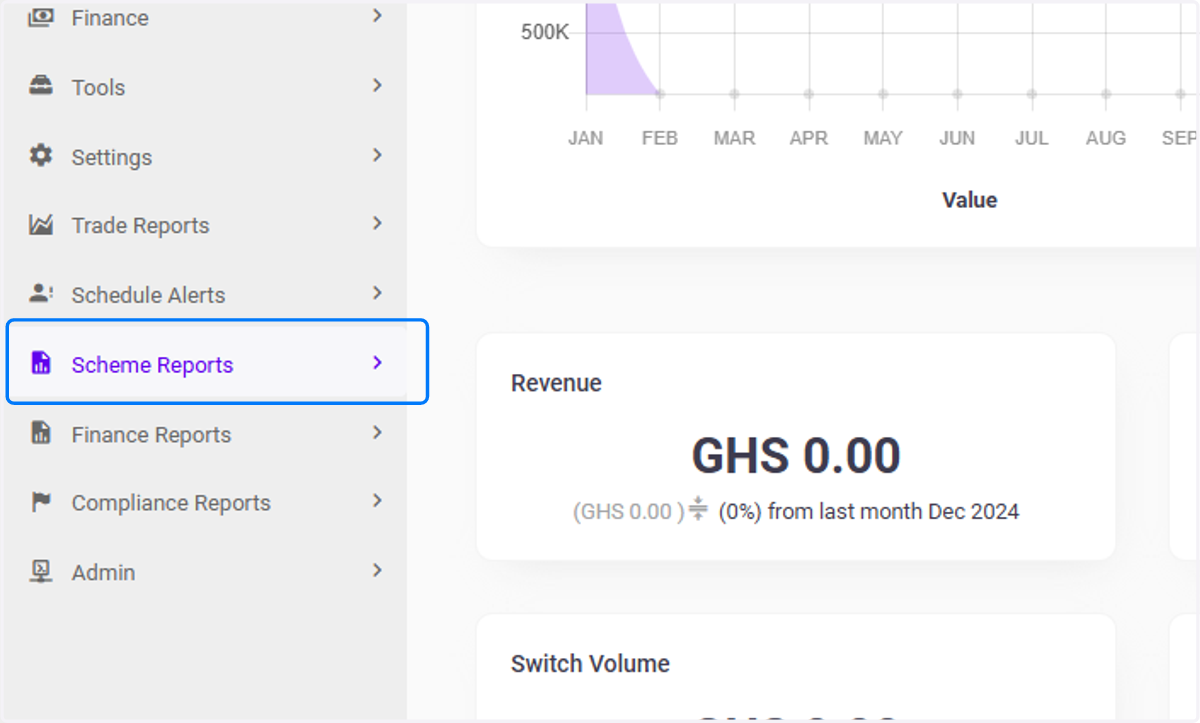
1. Click on Scheme Reports
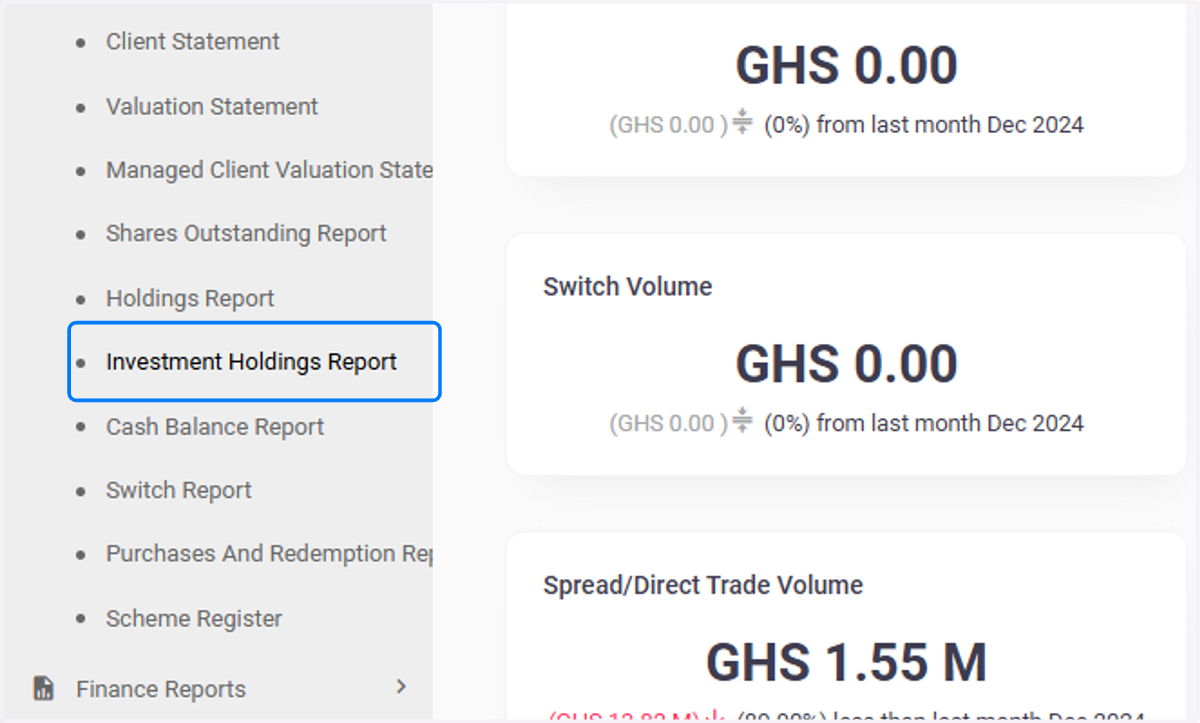
2. Click on Investment Holdings Report
The Investment Holdings Report provides a comprehensive summary of a scheme's investment portfolio.
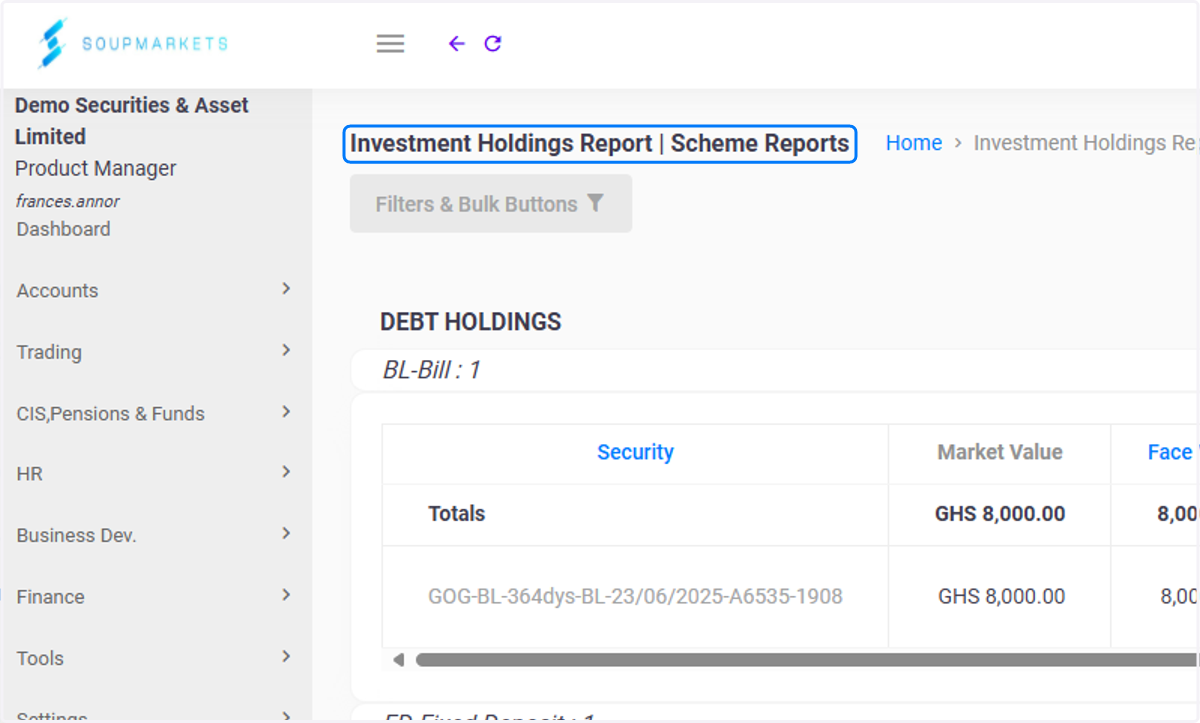
3. Click on Investment Holdings Report | Scheme Reports
The Investment Holdings Report is specifically for tracking the securities held within a scheme's portfolio. It provides detailed information on various types of securities, such as bonds, bills, and fixed deposits.
4. Filters and Bulk Buttons
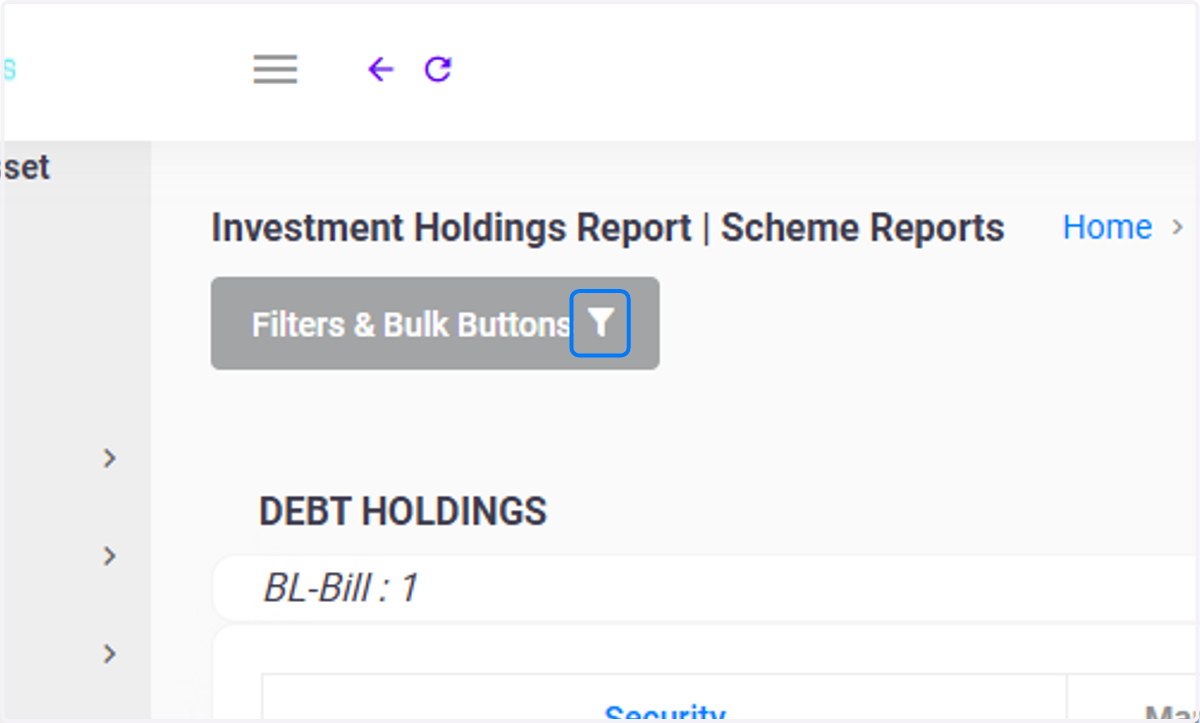
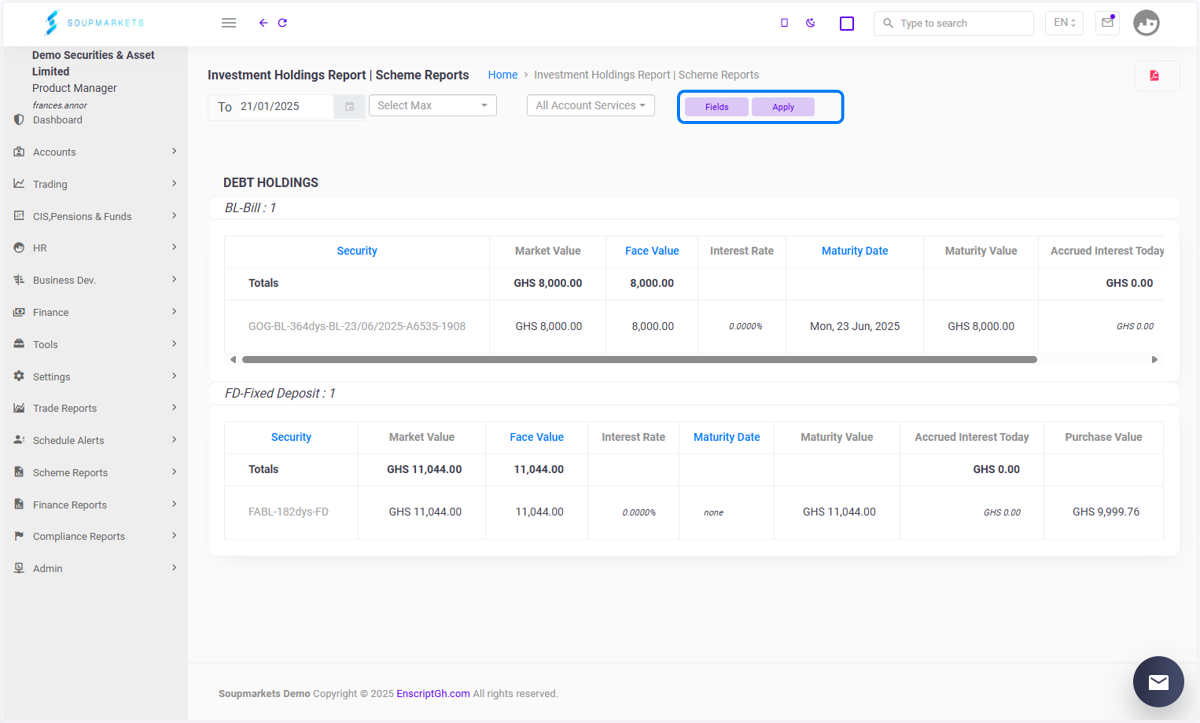
Filters and bulk buttons are essential elements that help users manage and interact with the data efficiently. To expand and display additional filter options, click on the filter button. This allows you to refine the data displayed in the table based on more specific criteria.
5. Filters and Bulk Buttons
6. Debt Holdings
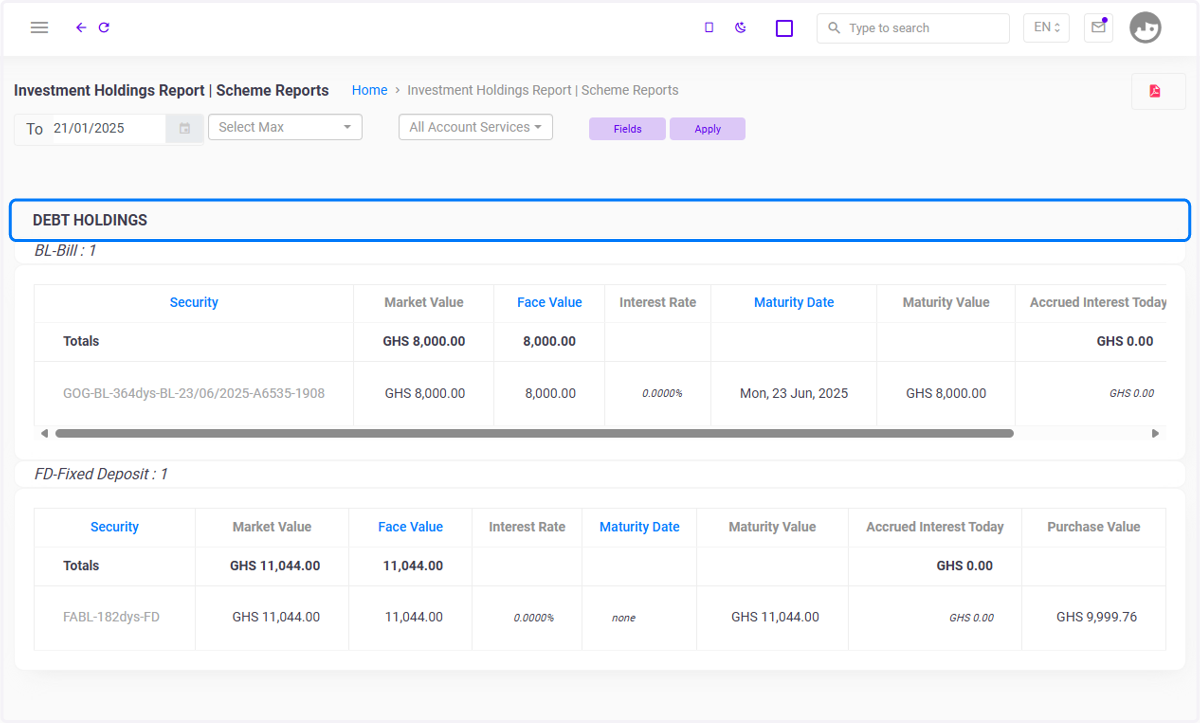
This section focuses on bonds and other debt securities held within the portfolio. Debt securities represent investments where the issuer owes the investor a debt and pays interest over a period
7. Fixed Deposit
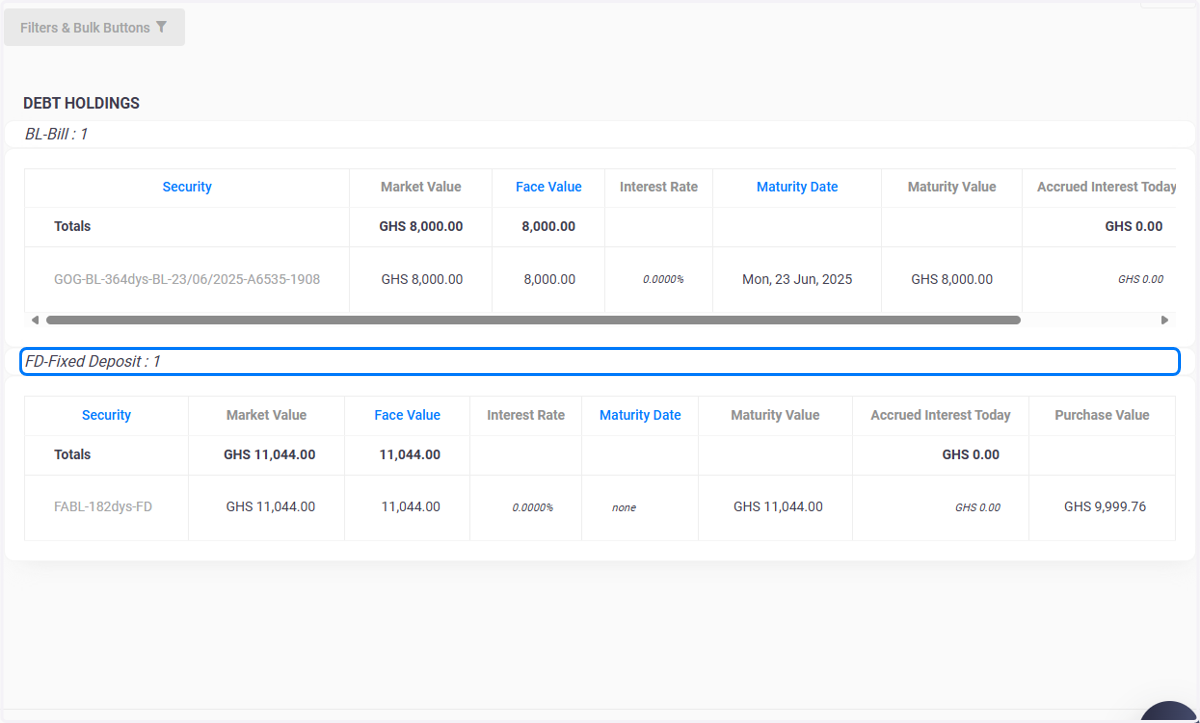
Example of Debt Holding
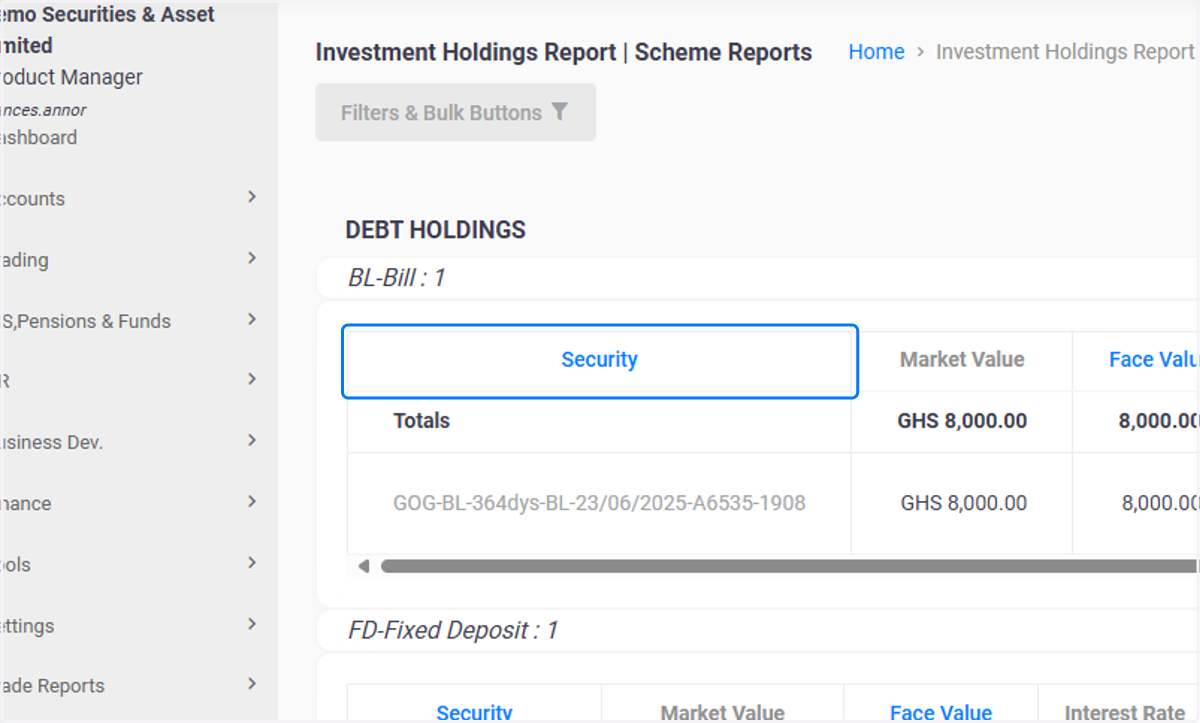
8. Security
This heading highlighted in blue shows specific securities held under the scheme. This allows you to focus on particular securities within the asset class.
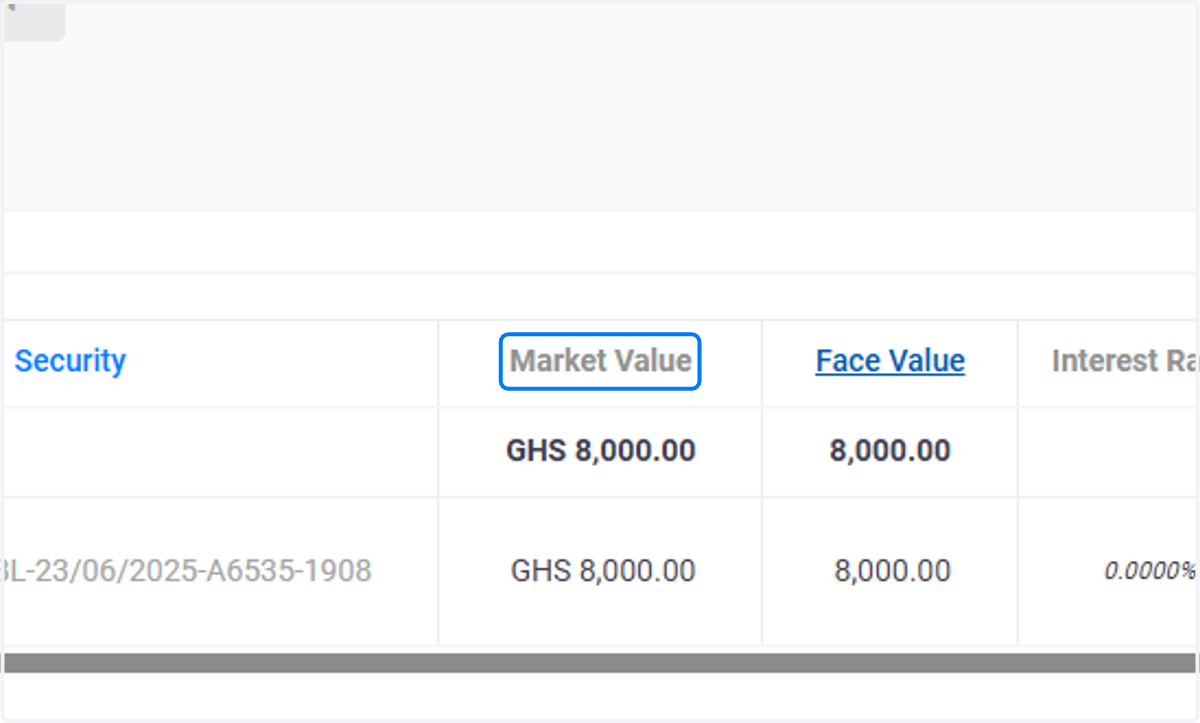
9. Market Value
Market Value refers to the current value of an asset or security in the market. It is calculated based on the latest available price for that asset and reflects what investors are willing to pay for it at a given time.
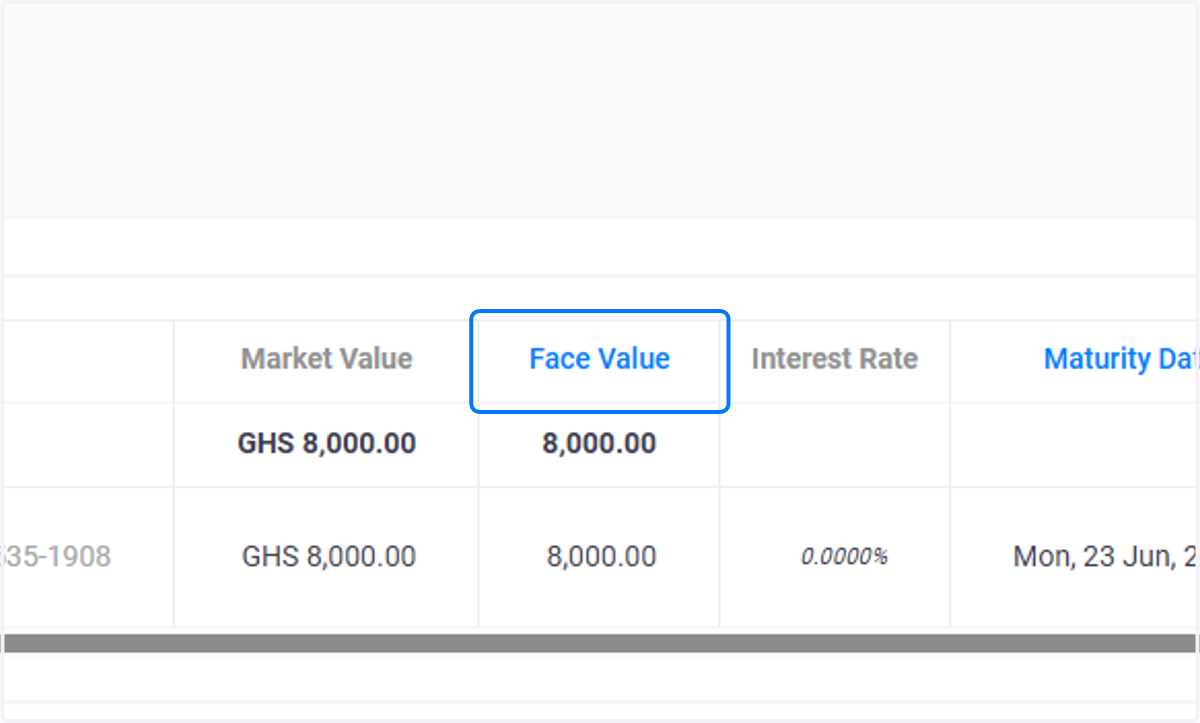
10. Face Value
Face Value refers to the nominal or original value of a security as stated by the issuer. It is the amount that the holder of a debt instrument, such as a bond, will receive from the issuer at maturity, excluding interest payments
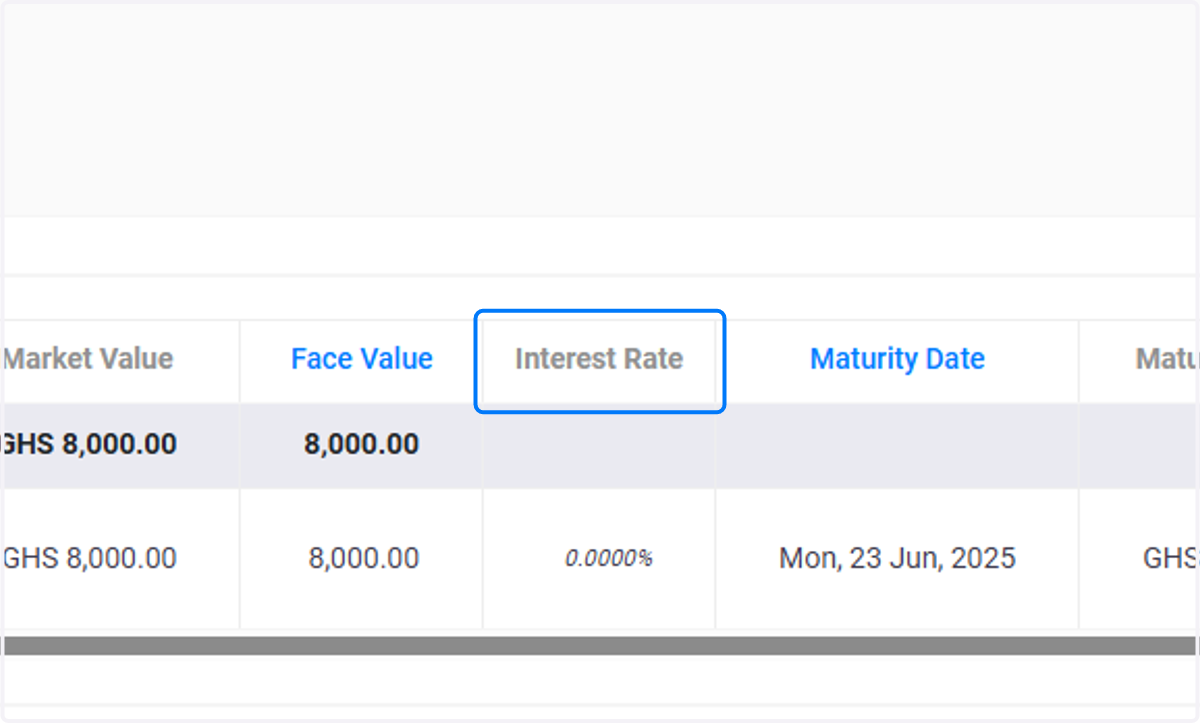
11. Interest Rate
Interest Rate refers to the percentage at which interest is paid by the issuer to the holder of a debt instrument, such as a bond, over a specified period.
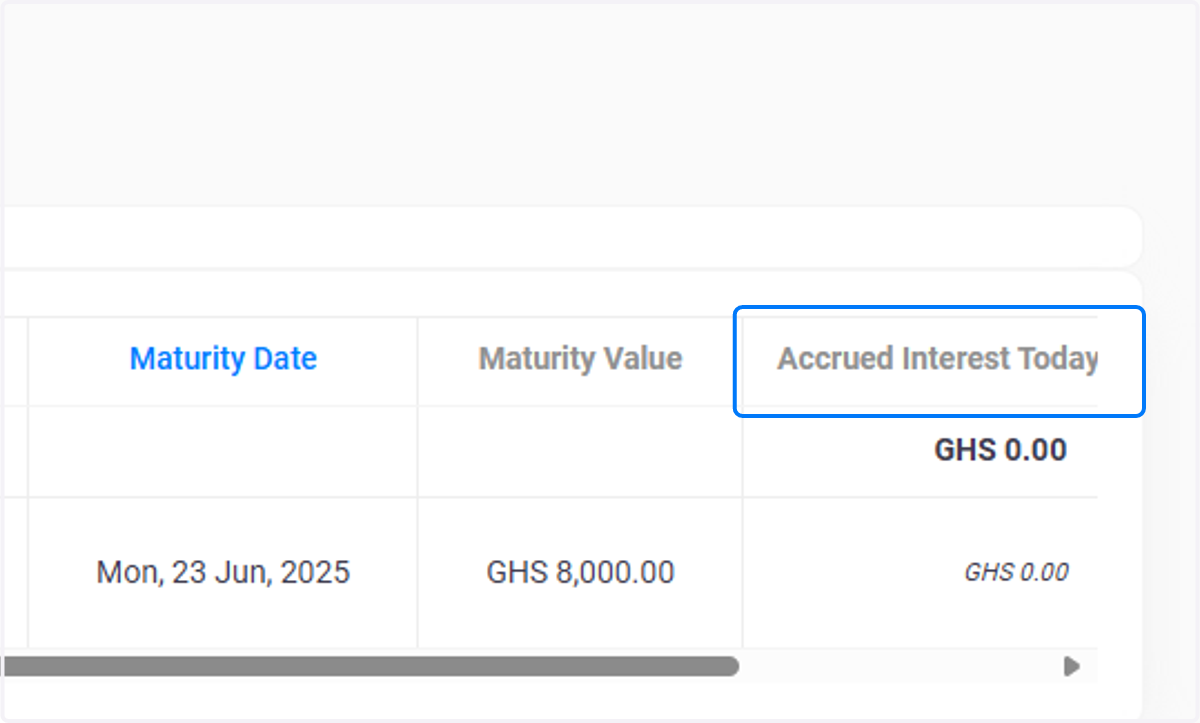
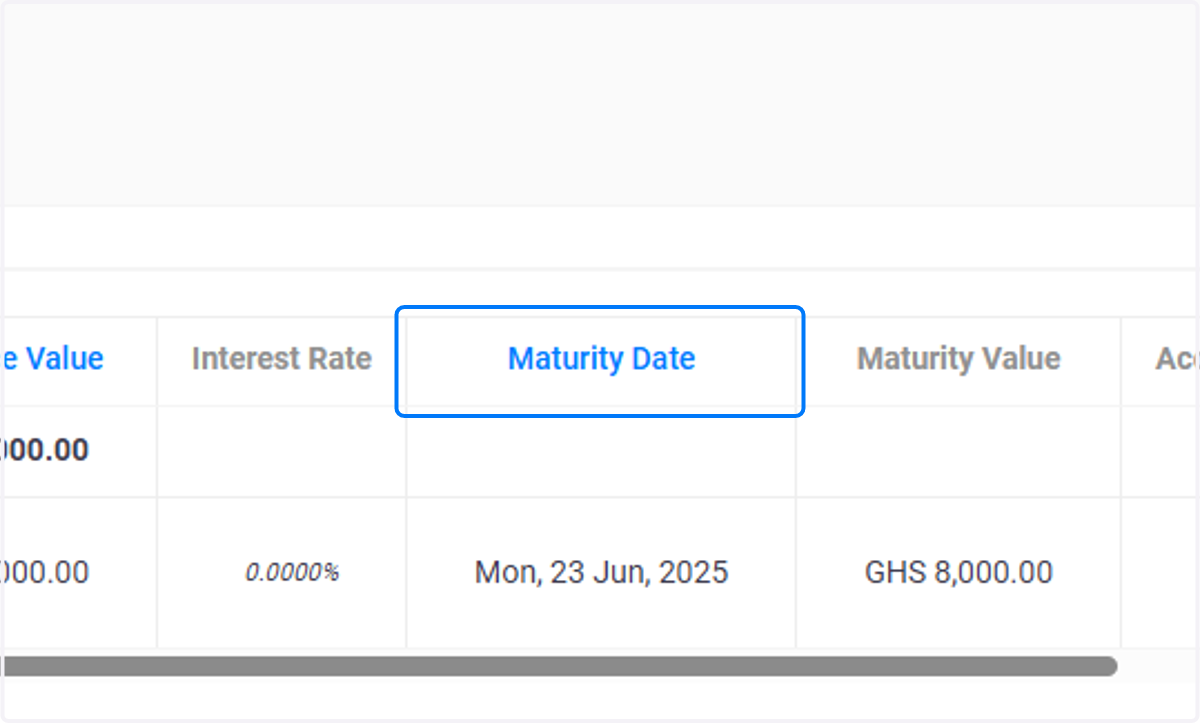
12. Maturity Date
Maturity Date refers to the specific date on which a debt instrument, such as a bond or fixed deposit, reaches the end of its term and is due for repayment by the issuer.
13. Accrued Interest Today
Accrued Interest Today represents the amount of interest that has accumulated on a debt instrument, such as a bond, from the last interest payment date up to the current date.