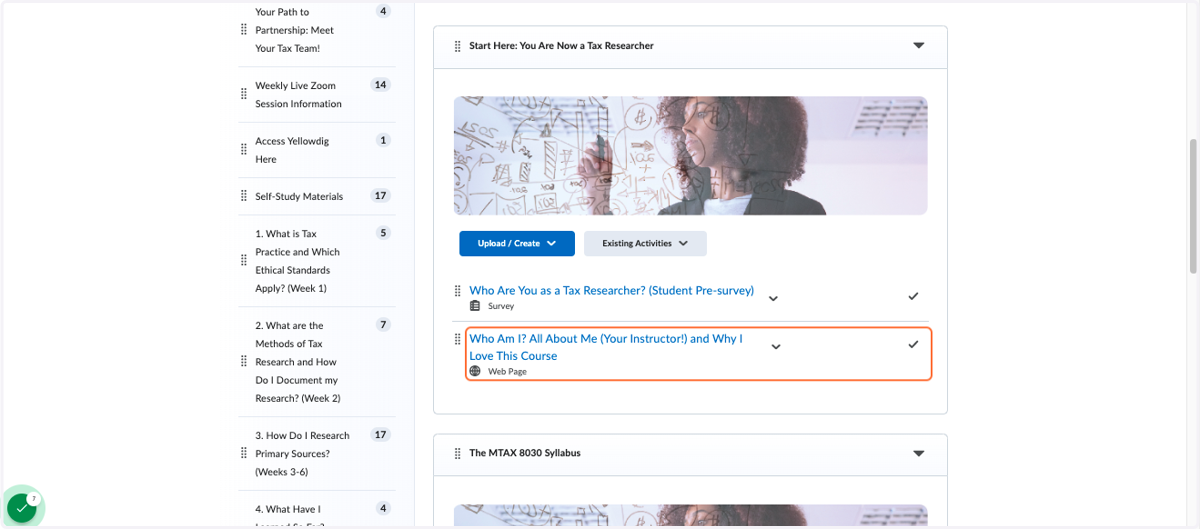
1. Overview: Course description and onboarding information on homepage
2. Multimedia: Infographic organizing all course contents and how they connect to each other
3. Course Narrative: "Becoming a Tax Analyst" course narrative throughout the course and module titles reflecting common workplace partnerships and research methods
4. Course Narrative: "Becoming a Tax Analyst" course narrative throughout the course and module titles reflecting common workplace partnerships and research methods
5. Pre-Course Surveys: Metacognitive reflections to support students' identity formation and bridging of experience as tax analysts
6. Group Projects: Scaffolded learning and to reflect the tax research collaborative work environment
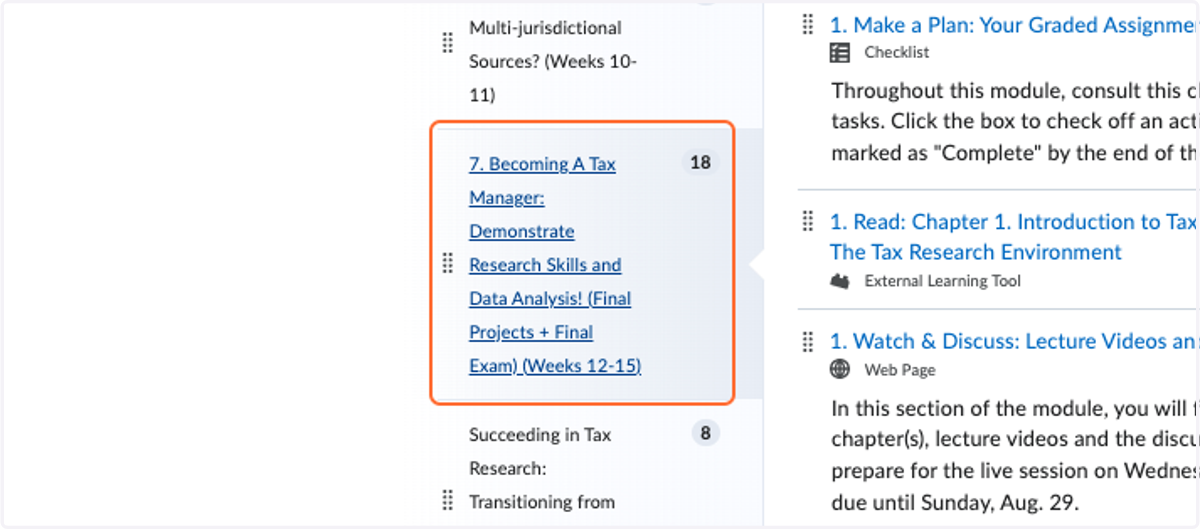
7. Module Titles: Modules titled as key questions students should be able to answer as tax researchers
8. Module Descriptions: Templated module introductions with descriptions and key vocabulary
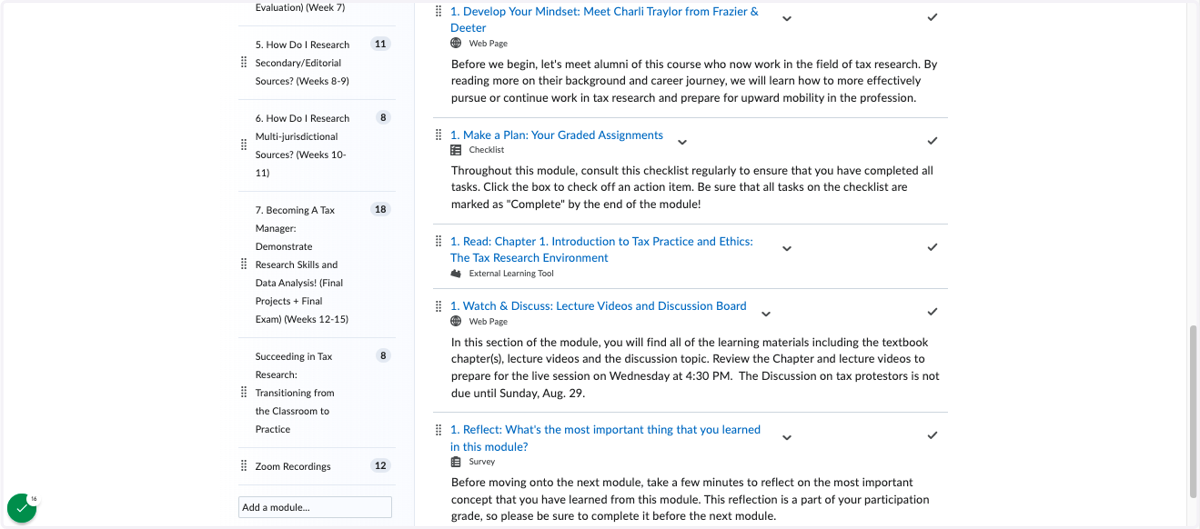
9. Module Components: Templated module components for a streamlined learning experience in each module
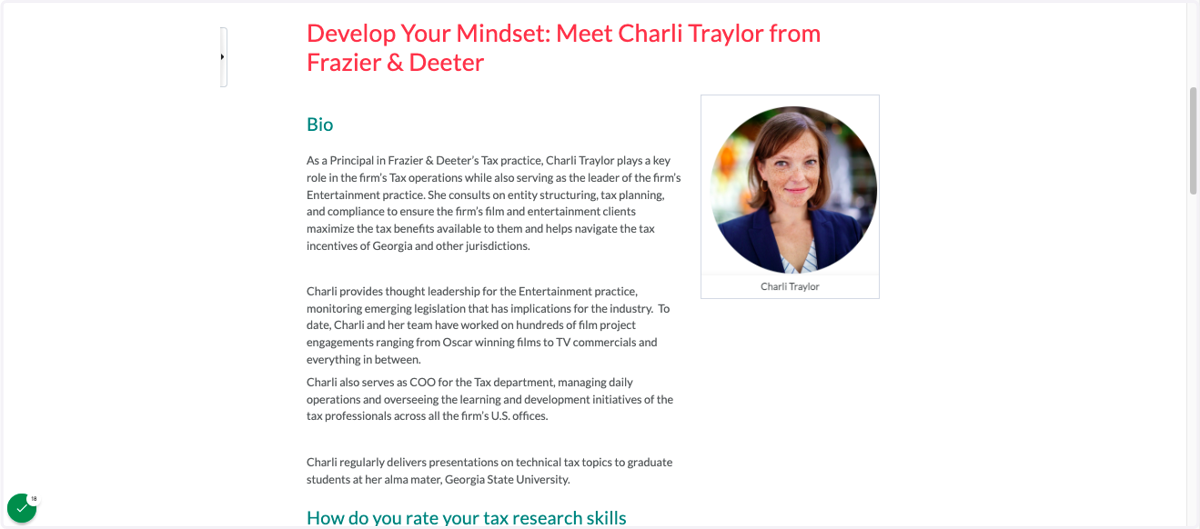
10. Module Component 1: Course alumni profiles with biographical information and advice for completing the course
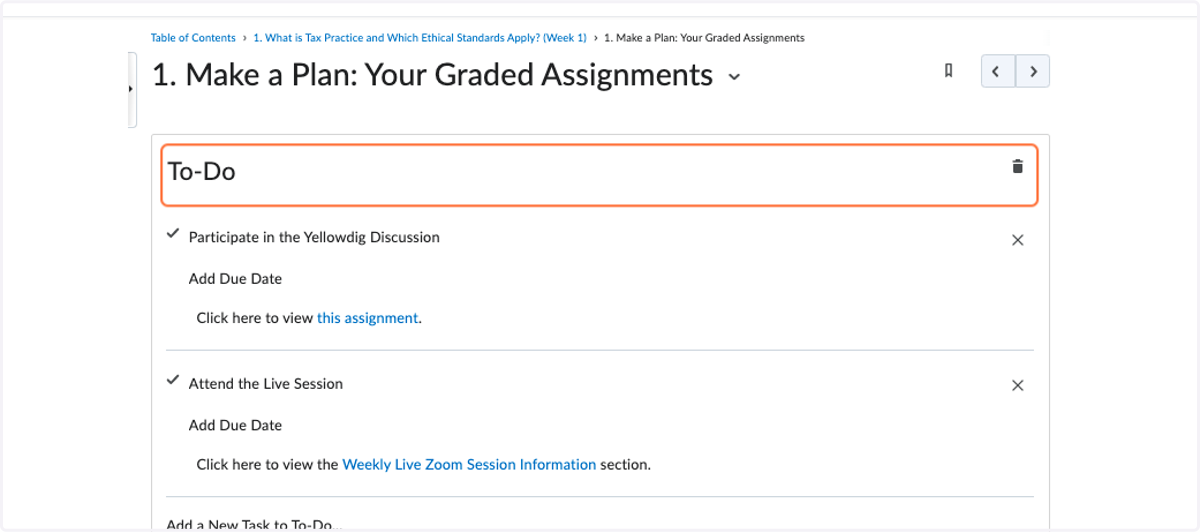
11. Module Component 2: Weekly checklist with information on graded assignments
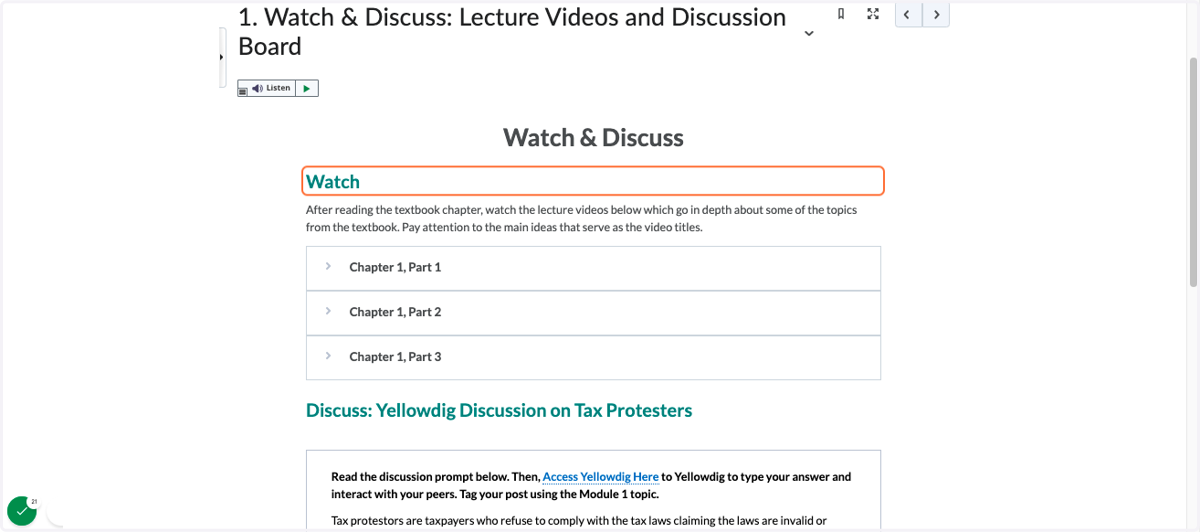
12. Module Component 3: Concise layout for lecture videos and discussion prompts
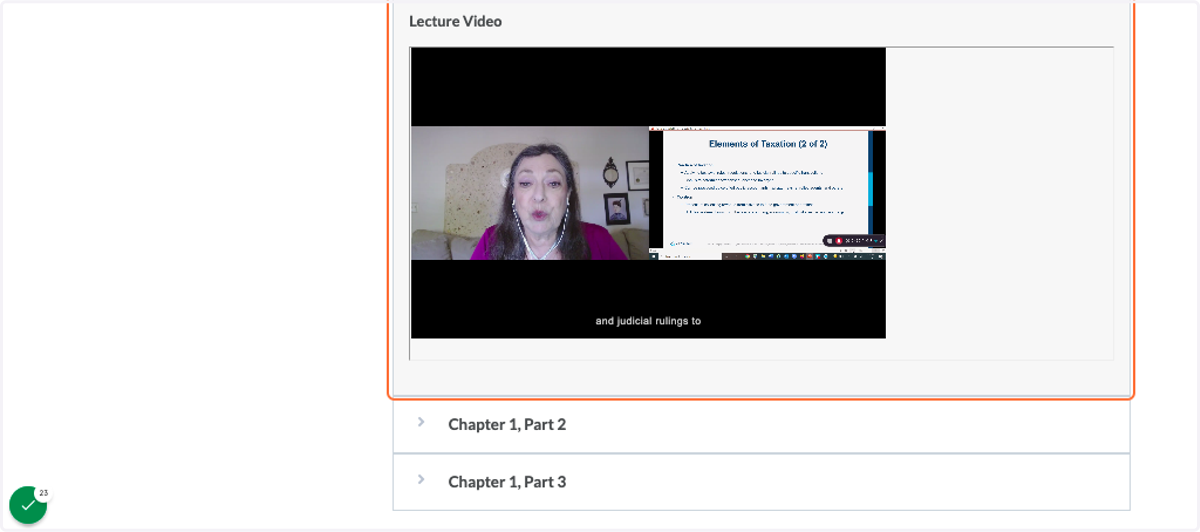
13. Module Component 4: Chunked videos by concept from the instructor
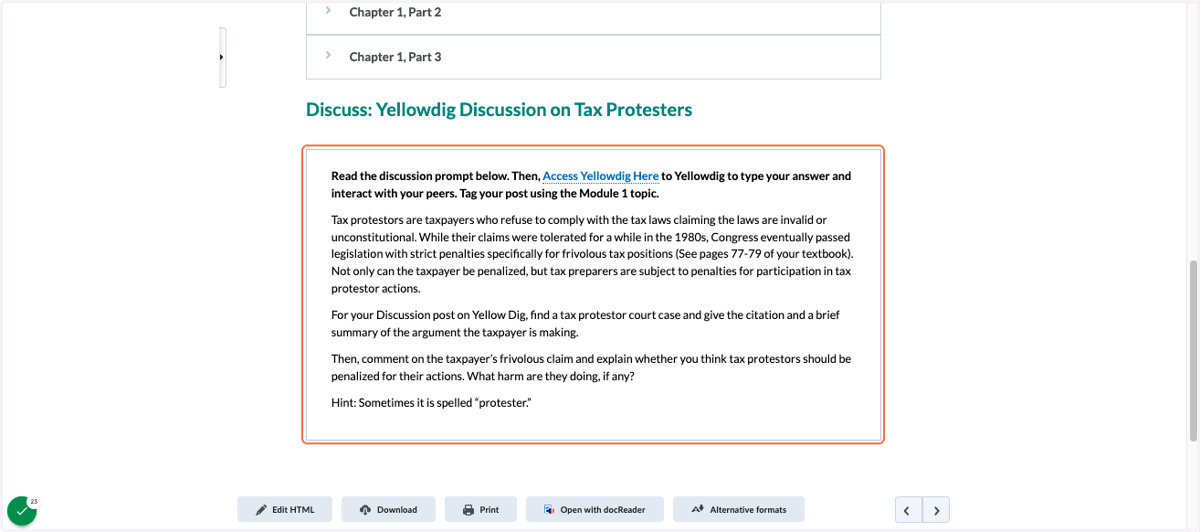
14. Module Component 5: Scenario and case-study based discussion prompts
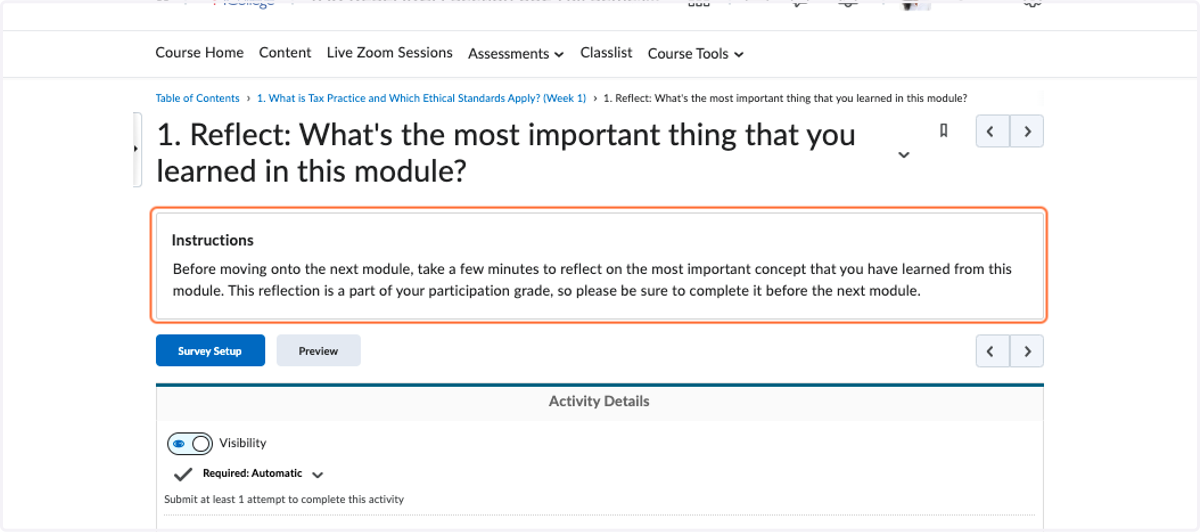
15. Module Component 6: Metacognitive reflections culminating each module
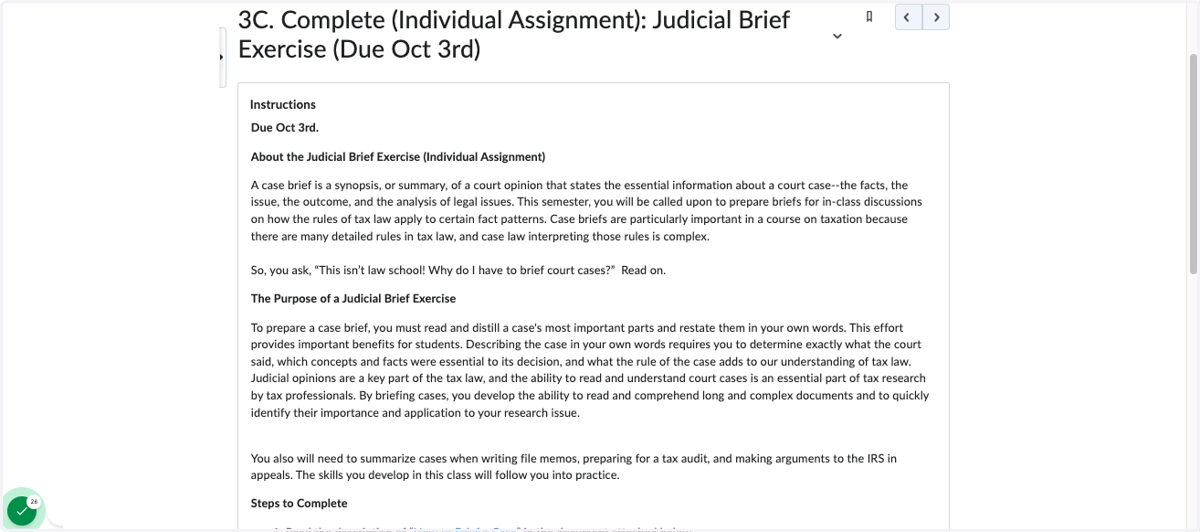
16. Assignment Example: "TILT" framework used for assignment information for greater transparency
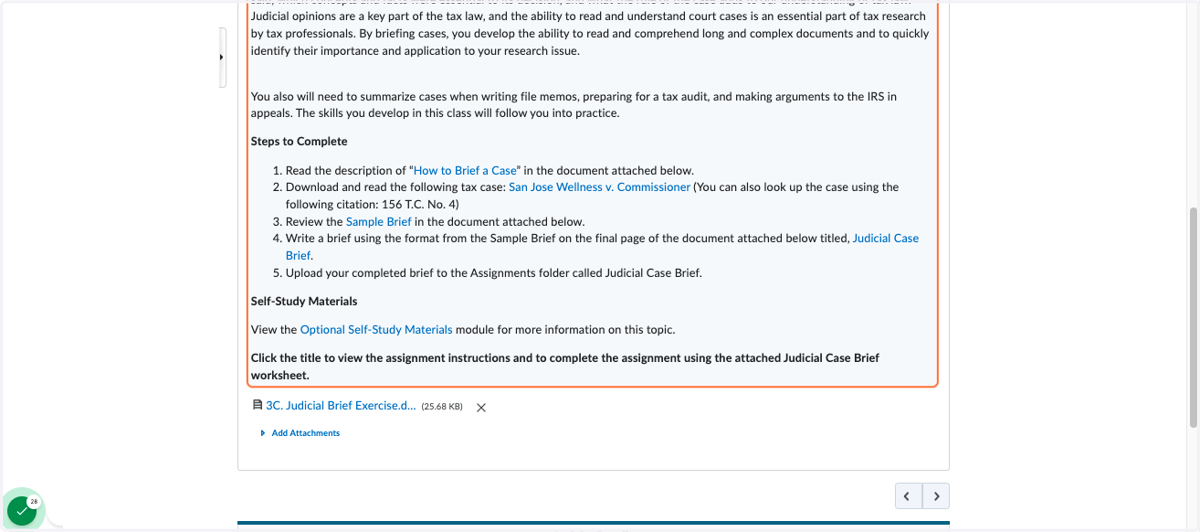
17. Assignment Example: Steps to complete each assignment with links to support resources
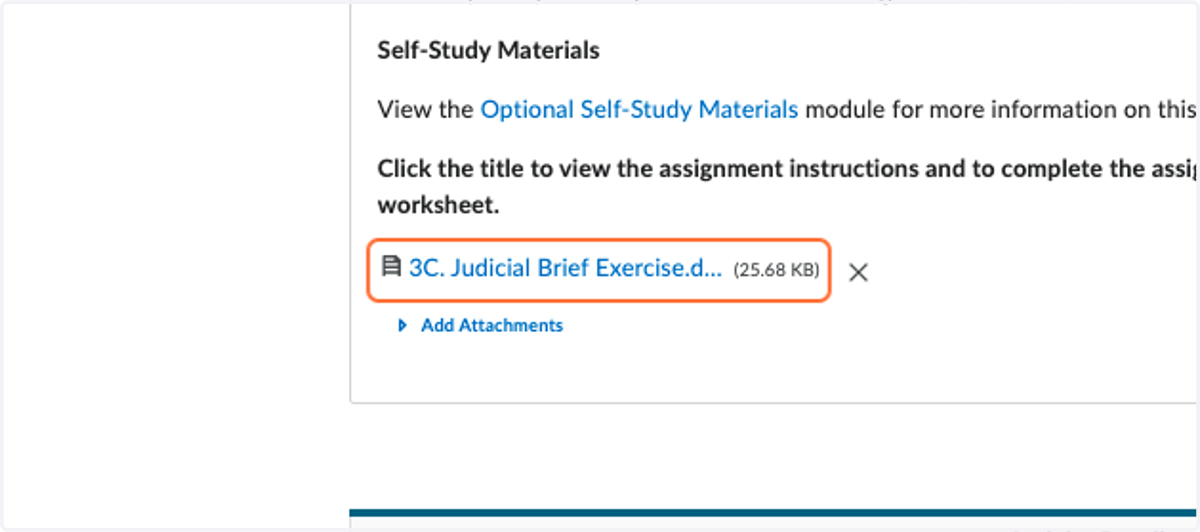
18. Assignment Example: Templated assignment documents for students to fill in to ensure assignment accuracy and completion
19. Farewell Module: Links to resources to support the transition of knowledge from the classroom to the workforce