1:1 TOP Task Review - The most powerful tool for leadership
The 1:1 TOP Task Review is the most powerful tool a leader has to develop their organization.
👉 If your people grow, your business grows.
The purpose of the 1:1 is to keep the focus on people’s development — especially on the important things that are often postponed because they don’t feel urgent.
The hard truth is this:
👉 most “fires” in business — lost market share, stronger competitors, declining performance — are the result of not focusing on development early enough.
More than results – the human dimension
Beyond performance, the 1:1 has a simple but powerful human dimension:
👉 The way you care about your people is the way they will care about:
your organization
shared goals
customers
company assets
Through the 1:1 TOP Task Review, a leader shapes:
mindsets
behaviors
standards of execution
And this effect scales:
👉 The way you lead your people is exactly how they will lead theirs.
Preparation is key
Always prepare carefully for the 1:1.
👉 The role owner must update their inputs at least 12 hours before the meeting.
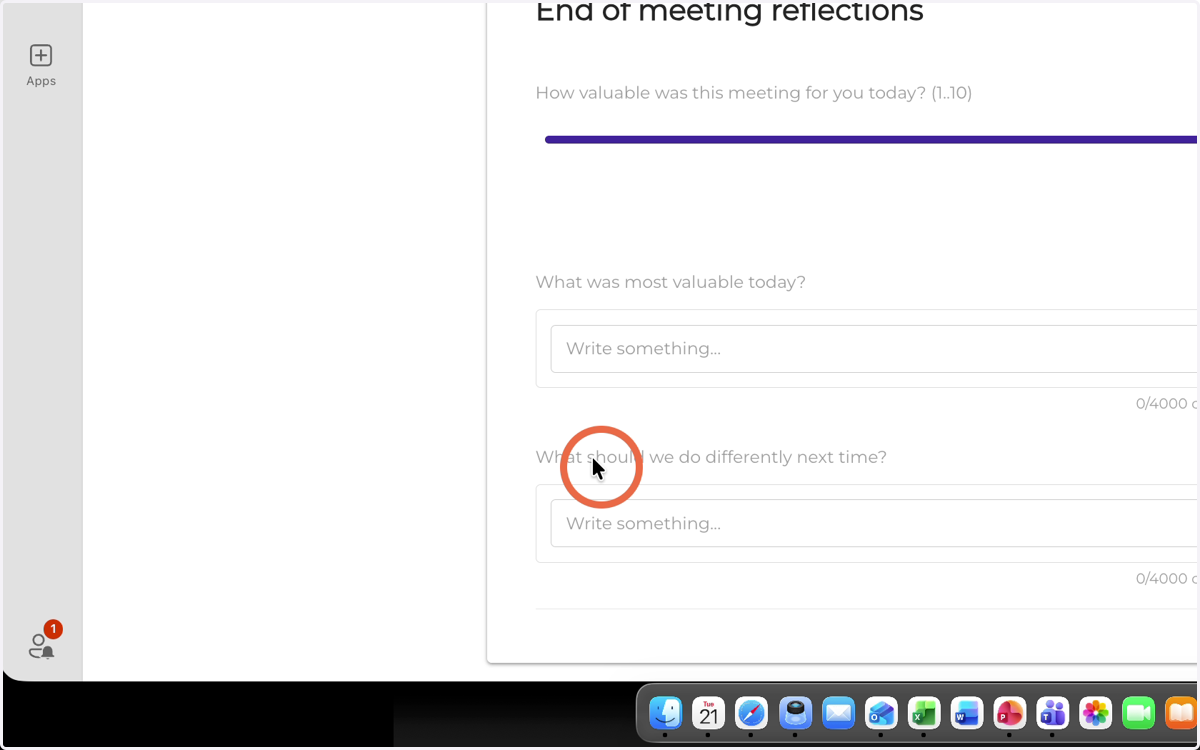
Preparation includes:
updating Key Result actual values
reviewing confidence level
defining TOP Tasks
reflecting on what worked and what didn’t
Without preparation, the meeting loses its power.
Purpose of the meeting
The 1:1 is not a status meeting.
👉 It is a development and focus session, where:
priorities are clarified
learning is extracted
next actions are defined
In one sentence
👉 The 1:1 TOP Task Review is where leaders build people — and through people, build the organization.
If you want next level:
👉 I can turn this into a hard-hitting 1-slide (conference level)
👉 or a short “Leader manifesto” version (very powerful tone)
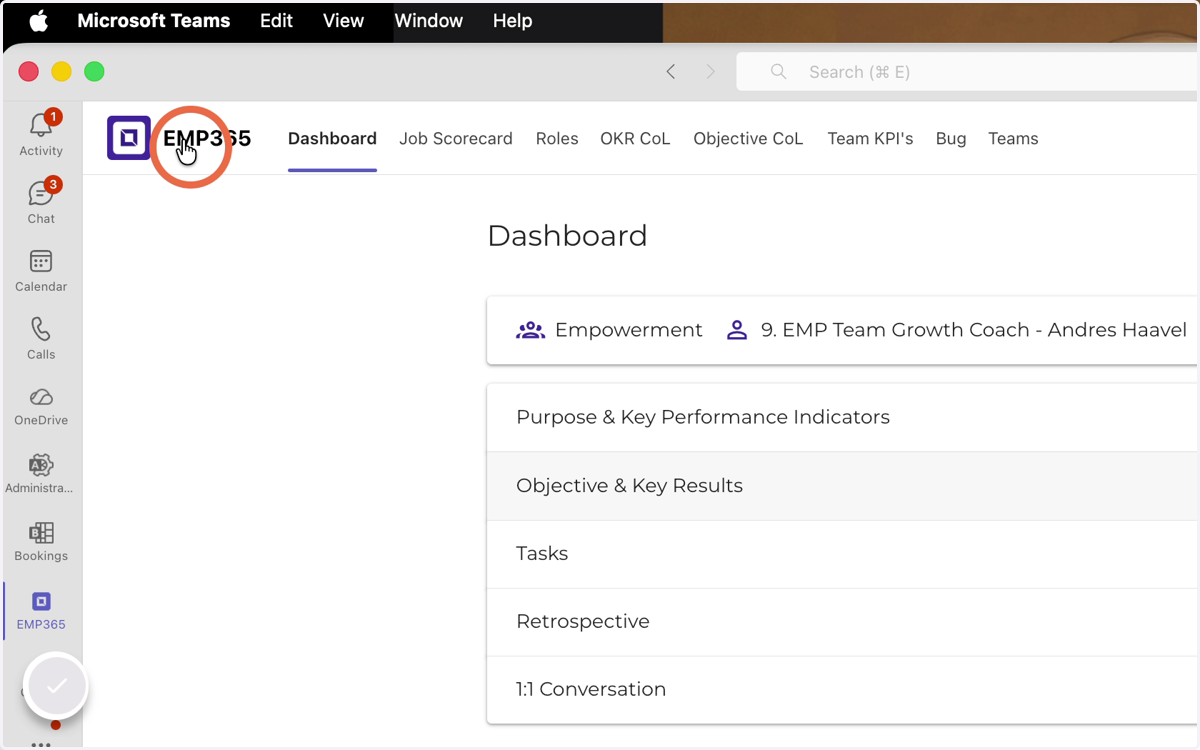
1. Open EMP365
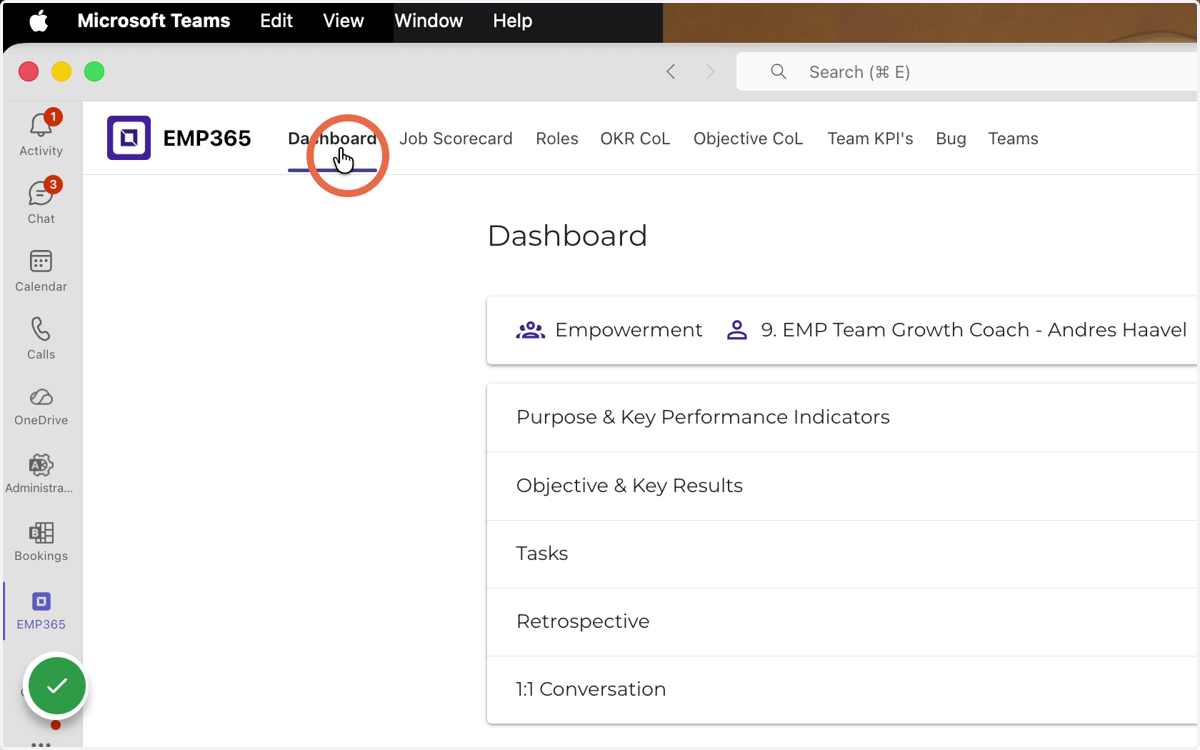
2. Go to the Dashboard
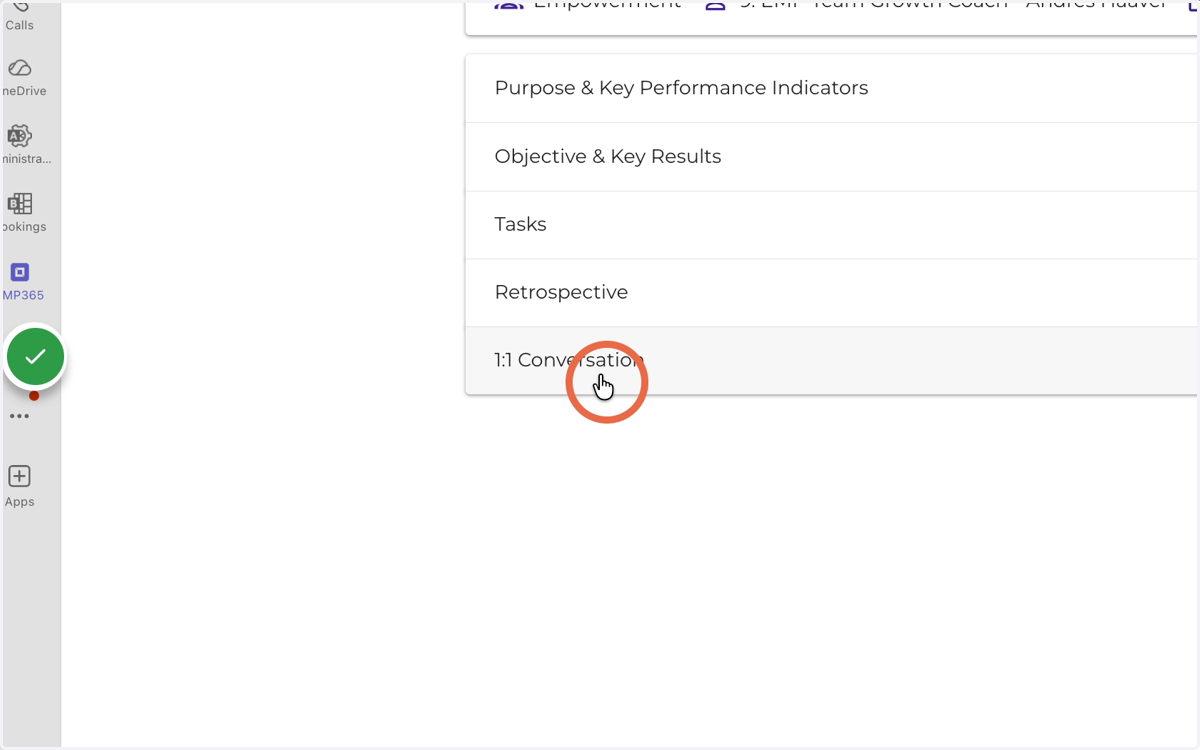
3. Open 1:1 Conversation
4. Select the user who will act as your coach for the 1:1 session
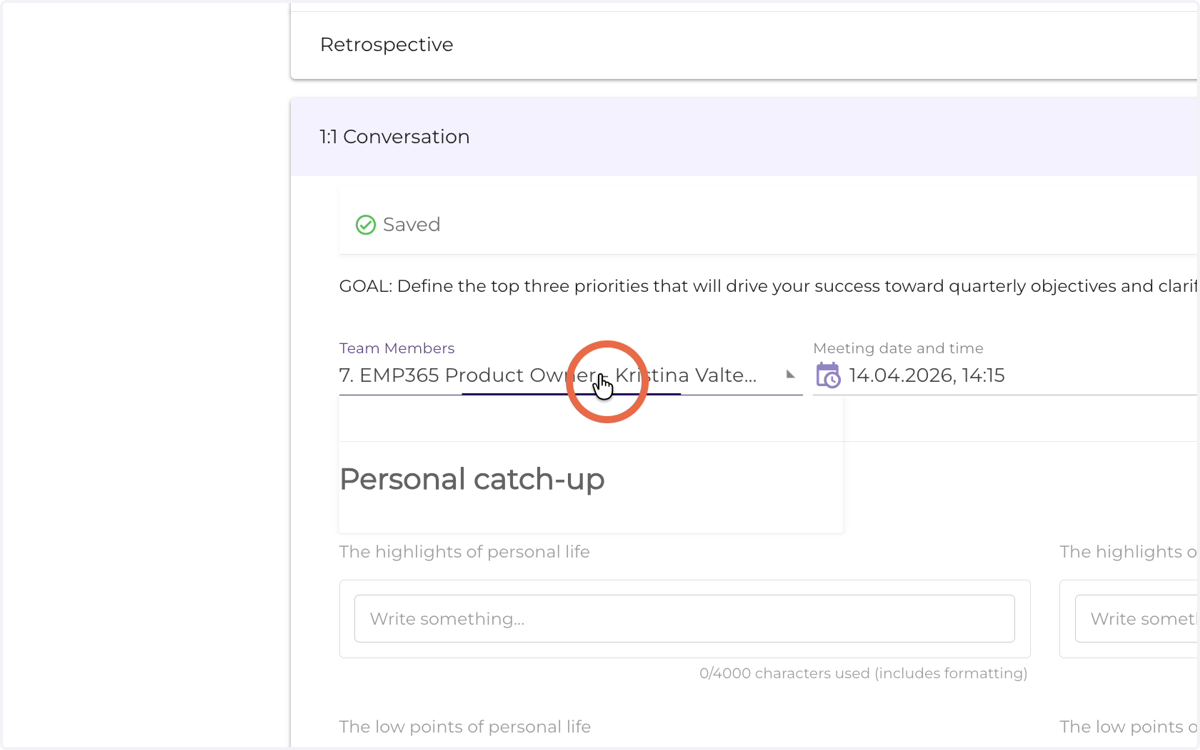
5. Select 1:1 conversation time
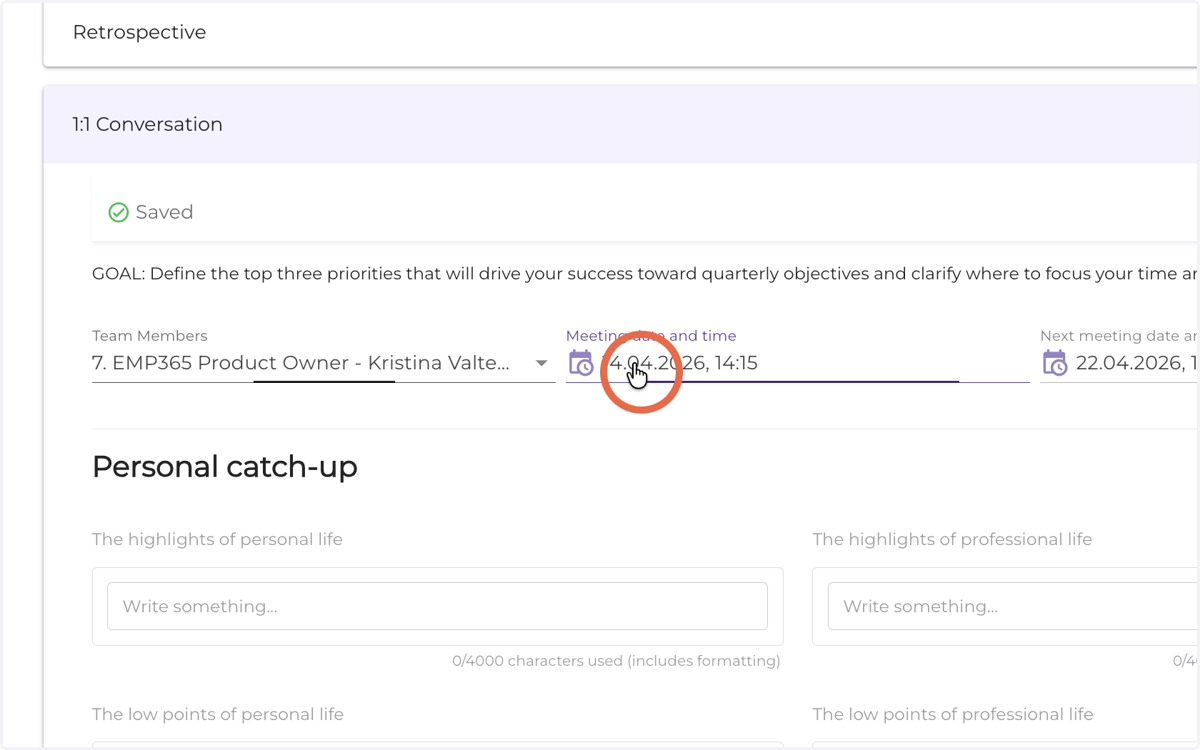
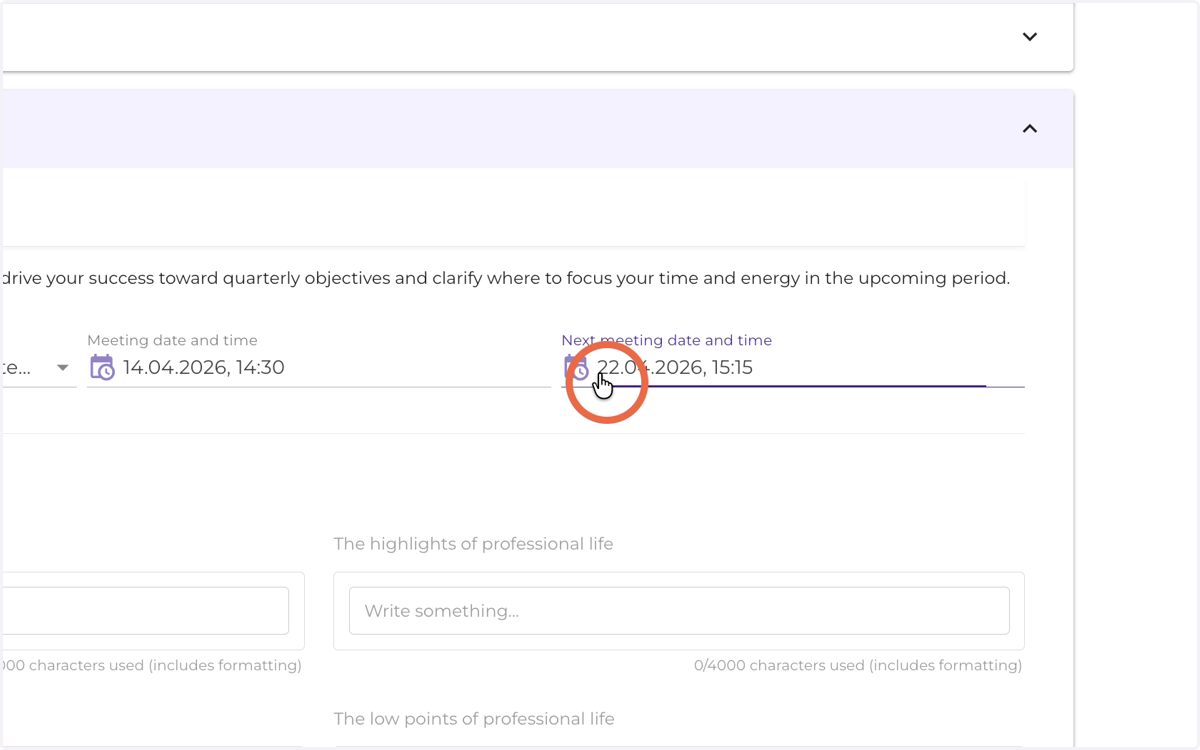
6. Select the next 1:1 conversation meeting time
7. Personal Catch-Up - Enter highlights from your personal life
1:1 conversation succeeds only when both parties are willing to be open and vulnerable.
1:1 Commandments
1. Create Safety
👉 No openness, no growth.
Speak honestly. Be willing to be vulnerable.2. Ask, Don’t Tell
👉 Great leaders ask better questions.
Your job is to unlock thinking — not give answers.3. Listen 90%
👉 If you talk too much, you learn nothing.
The best leaders speak last.4. Focus on Growth, Not Tasks
👉 Tasks deliver today.
Growth builds tomorrow.5. Raise the Standard
👉 What you tolerate becomes the culture.
What you reinforce becomes the habit.In one line
👉 You don’t run a 1:1 — you build a human who builds the business.
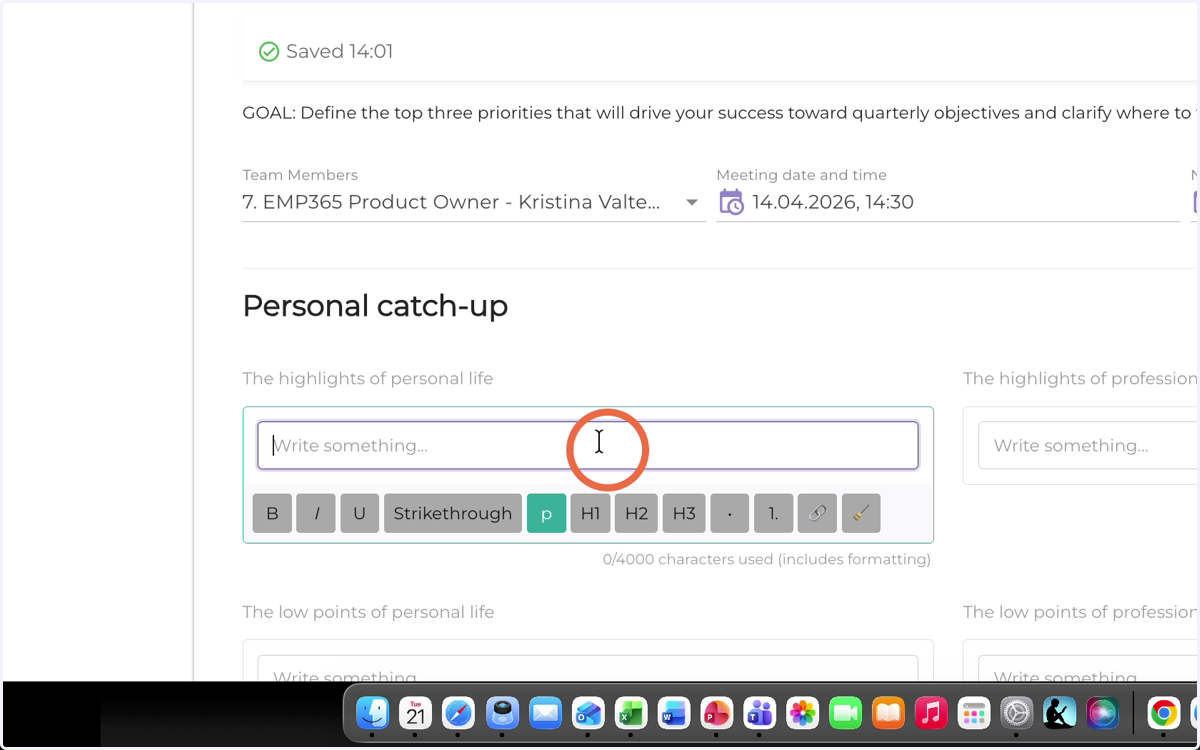
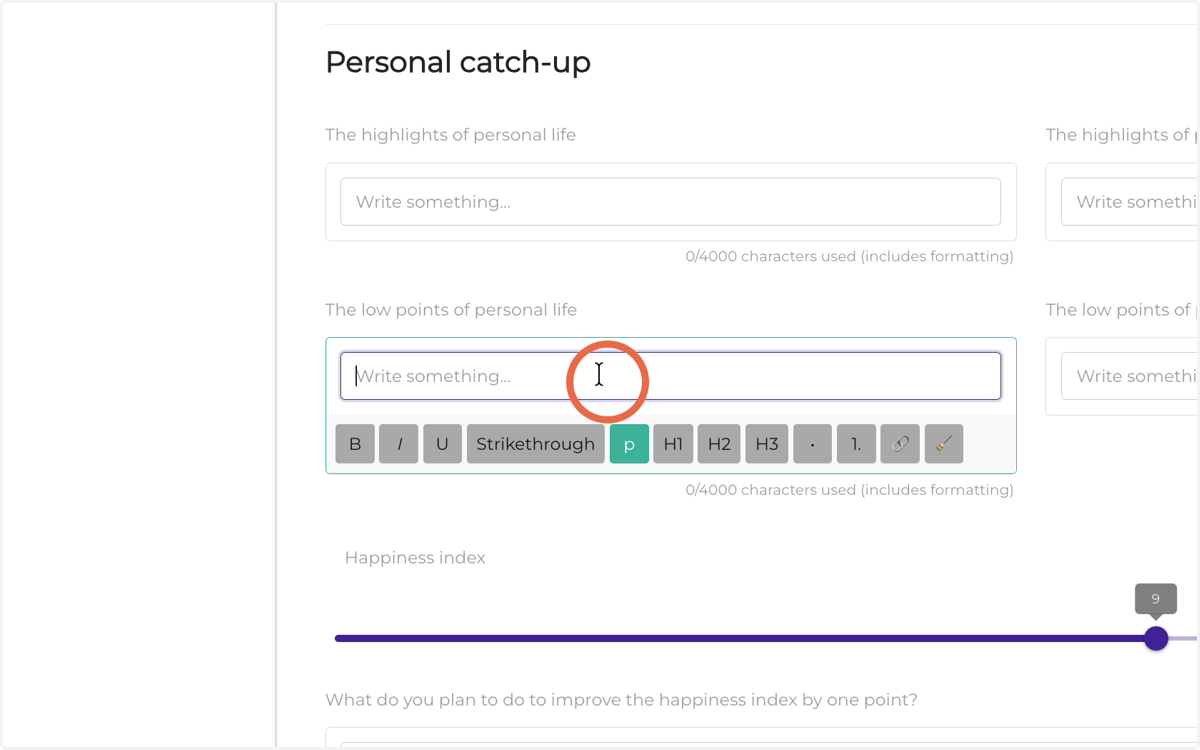
8. Enter low points from your personal life
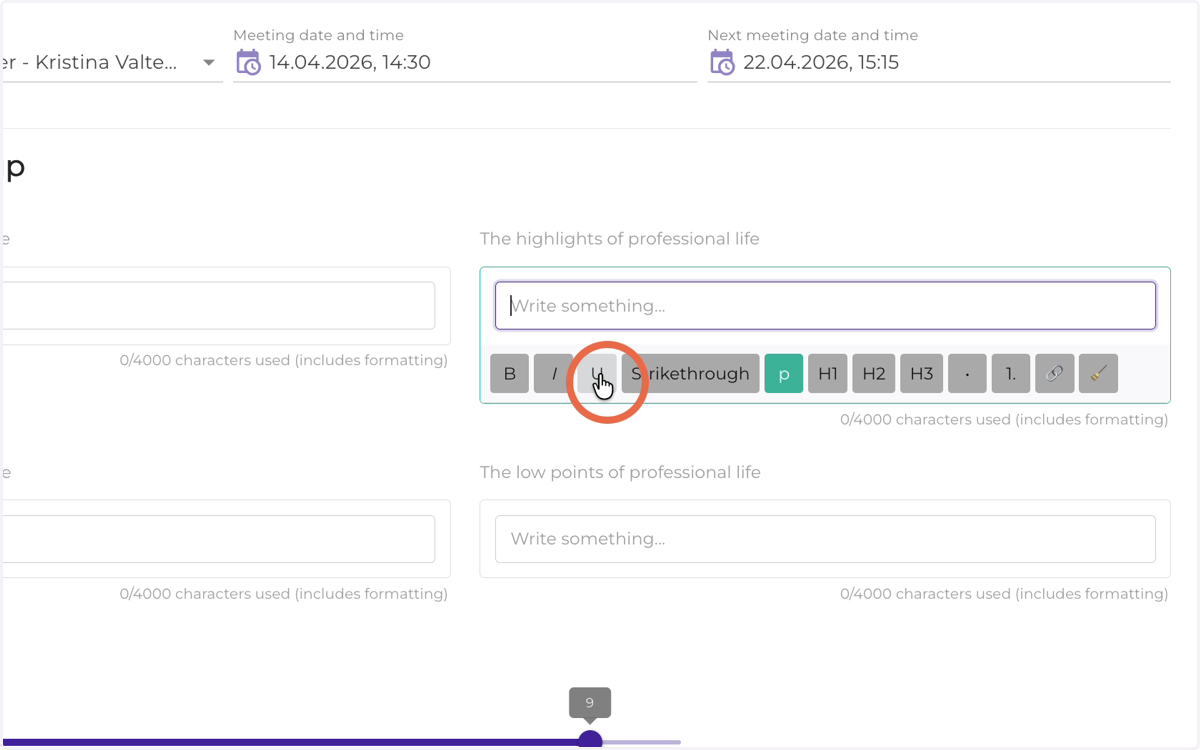
9. The highlights of professional life
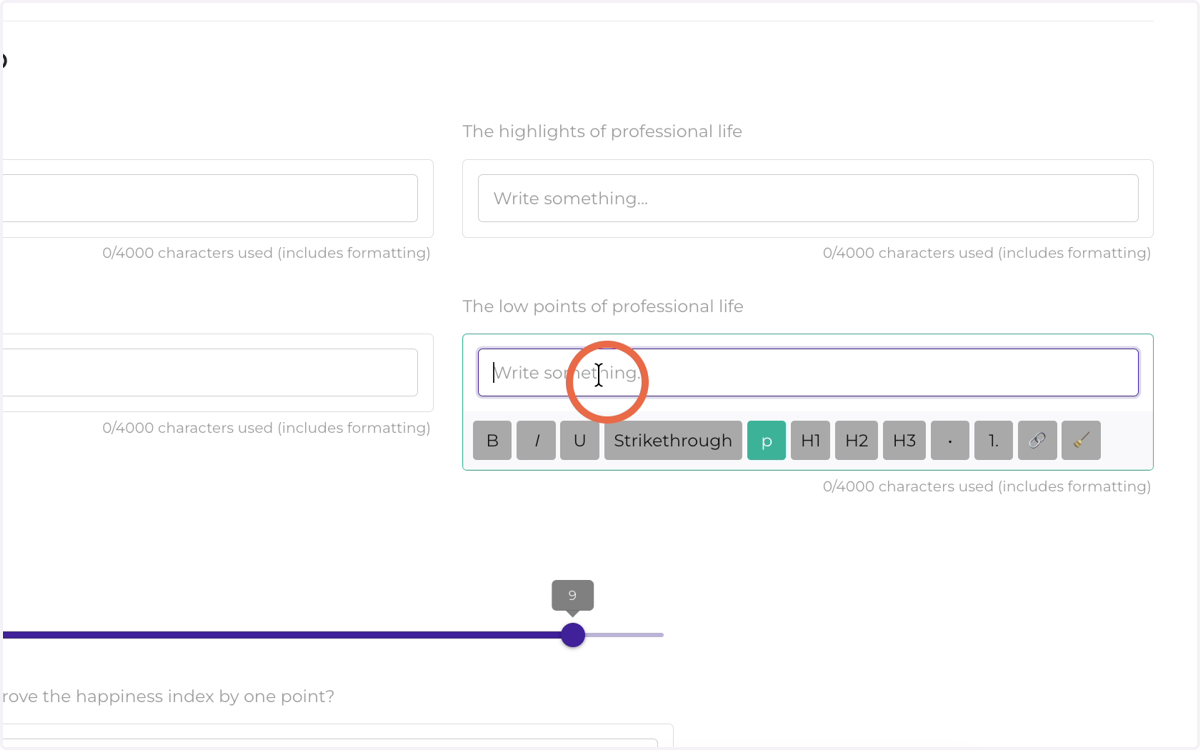
10. The low points of professional life
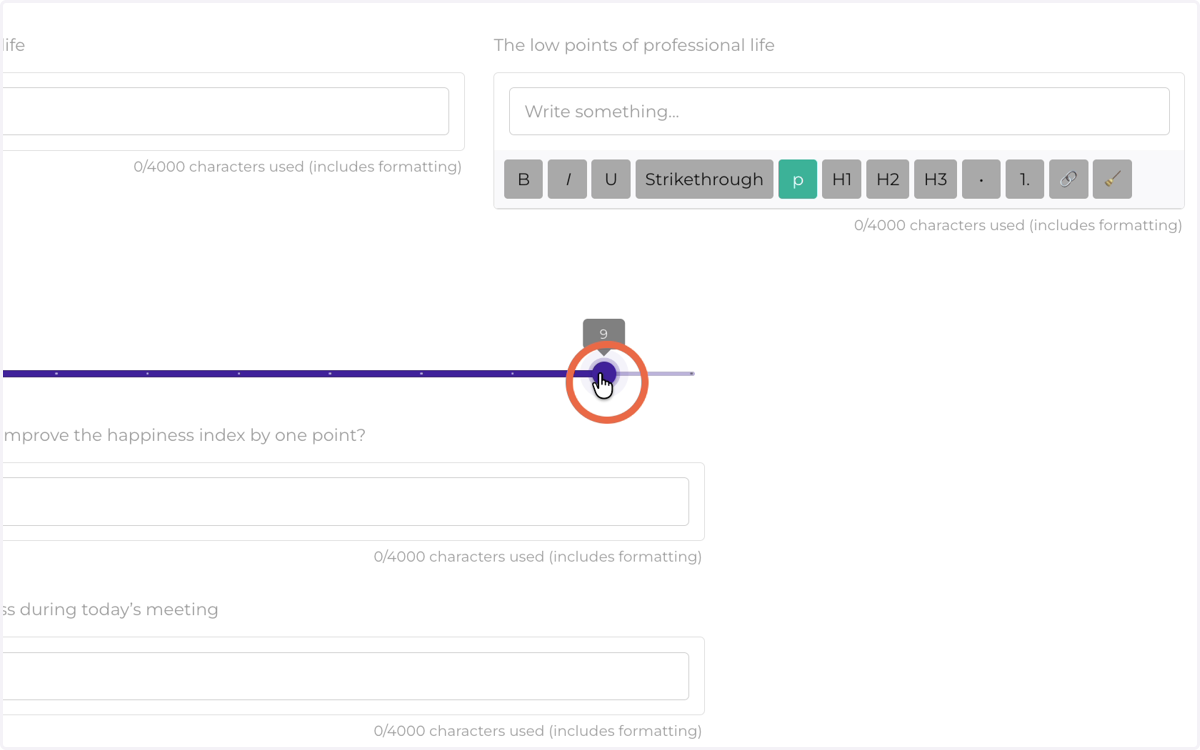
11. Move the slider to indicate, on a scale of 1–10, how happy you are. Be honest and open.
12. Write down what you plan to do to increase your happiness score by 1 point before the next conversation.
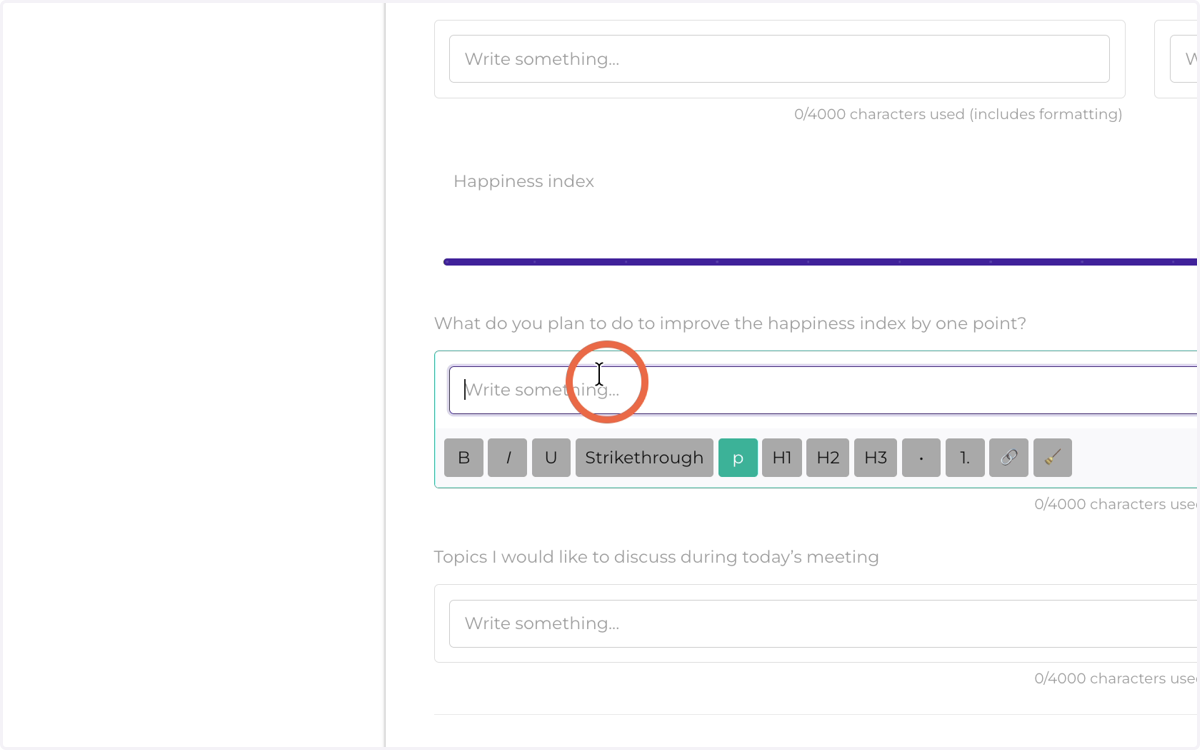
13. Enter the topics you want to discuss during the meeting
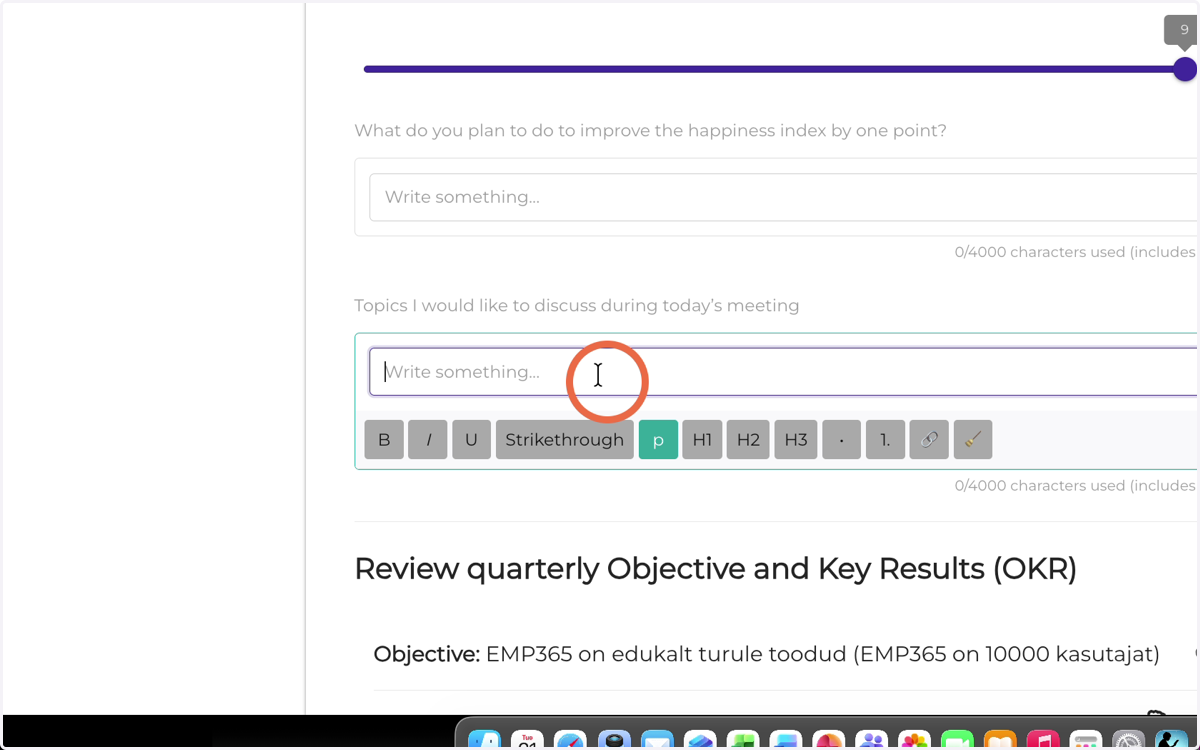
14. Provide a quick overview of the status of your quarterly priorities (OKRs).
For each Key Result:
👉 highlight the single most important action that must be completed to increase confidence in achieving it — and through that, increase confidence in achieving the Objective.If you need support from your manager or team, be ready to discuss it.
👉 This is also the moment to propose changes:
if you believe a Key Result should be adjusted, added, or removed — be ready to explain why.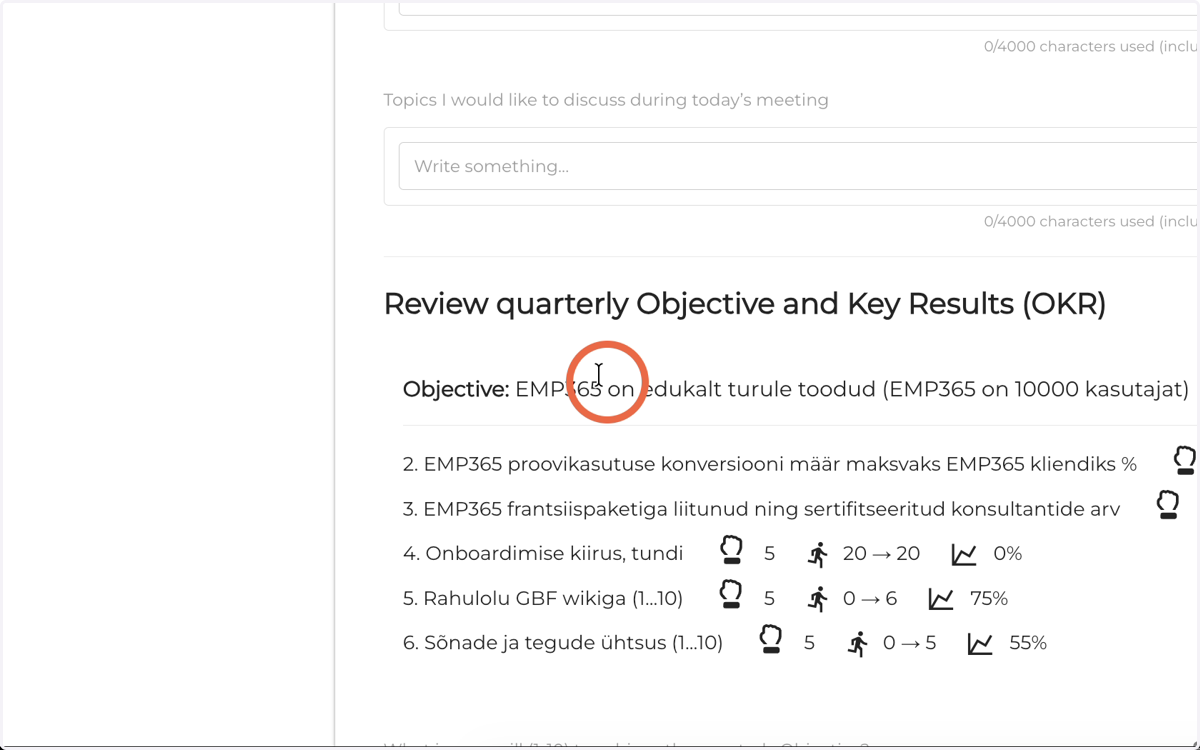
15. Rate, on a scale of 1–10, how strong your commitment is to achieving your goals.
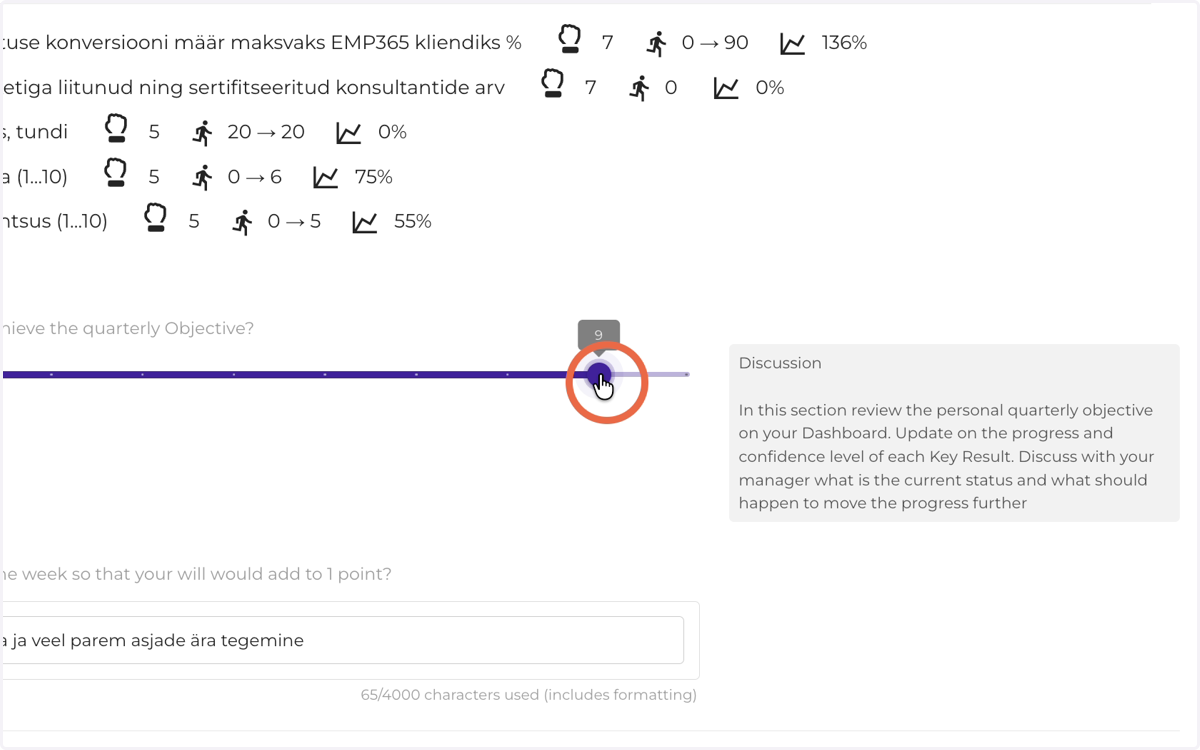
16. Write down what needs to change — from what to what — and what you will do to increase your commitment to achieving your goals to a 10.
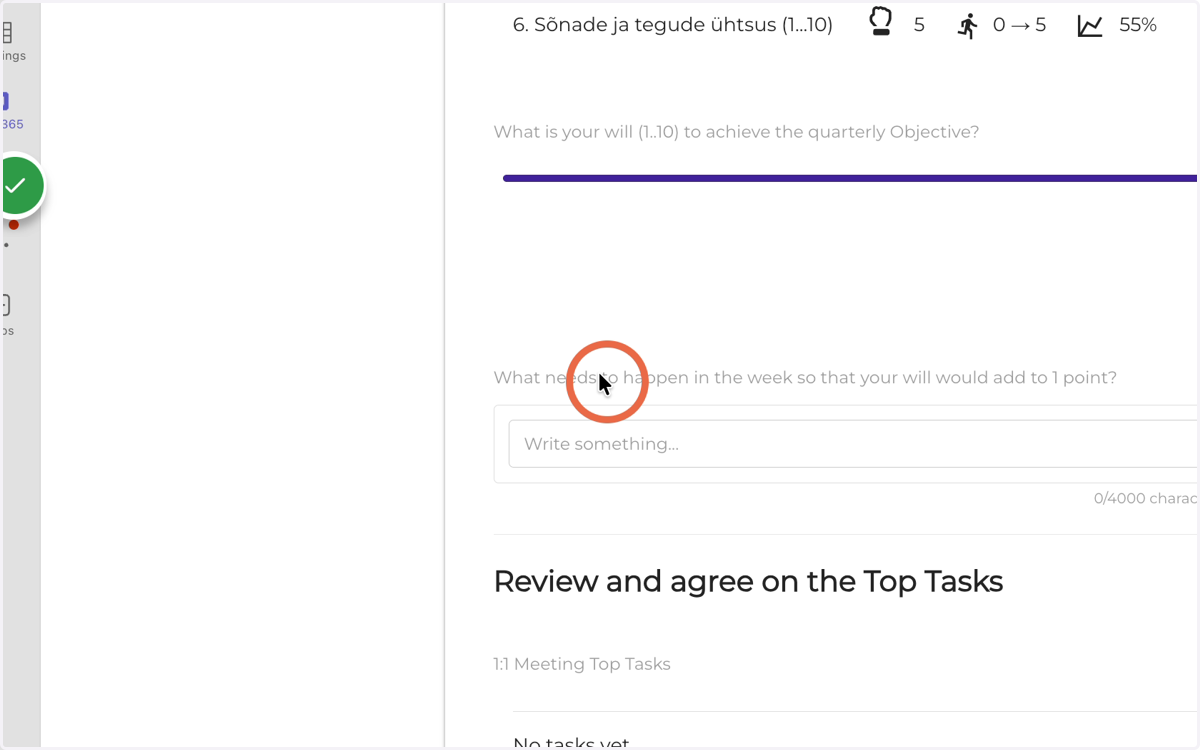
17. Provide an update on the status of the TOP Tasks agreed upon in the previous meeting.
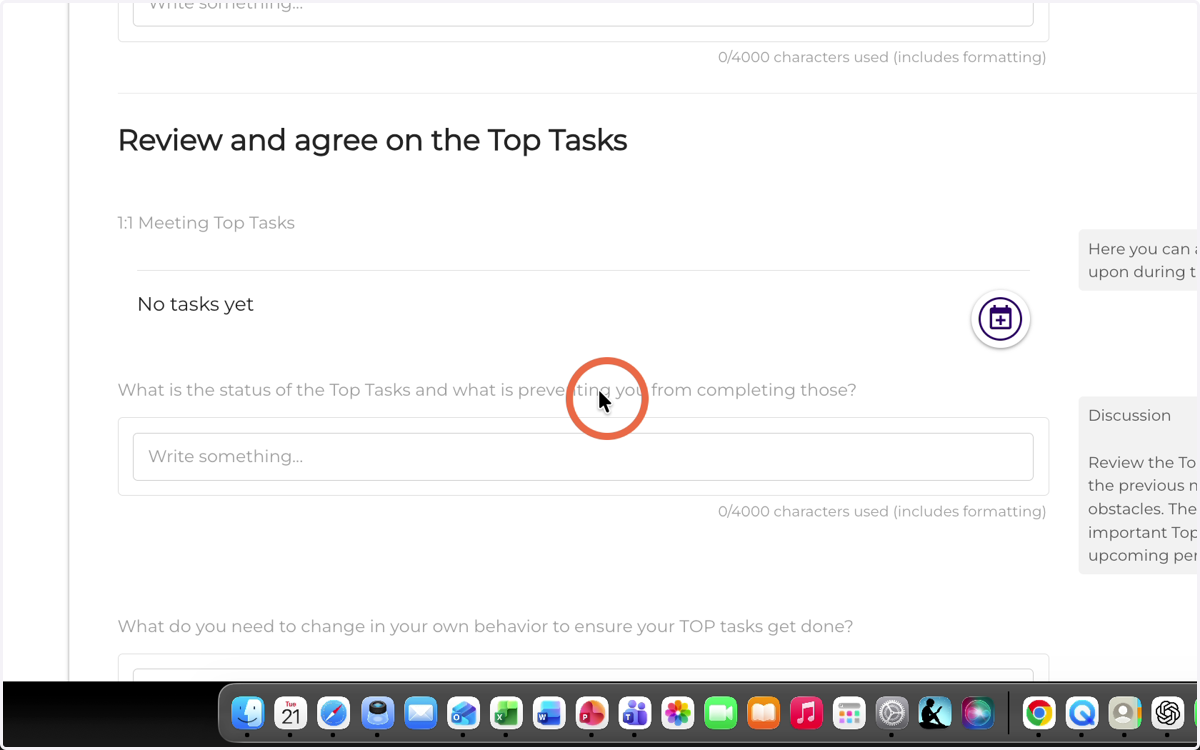
18. Write down what you plan to change in your behavior to ensure the TOP Tasks are completed on time.
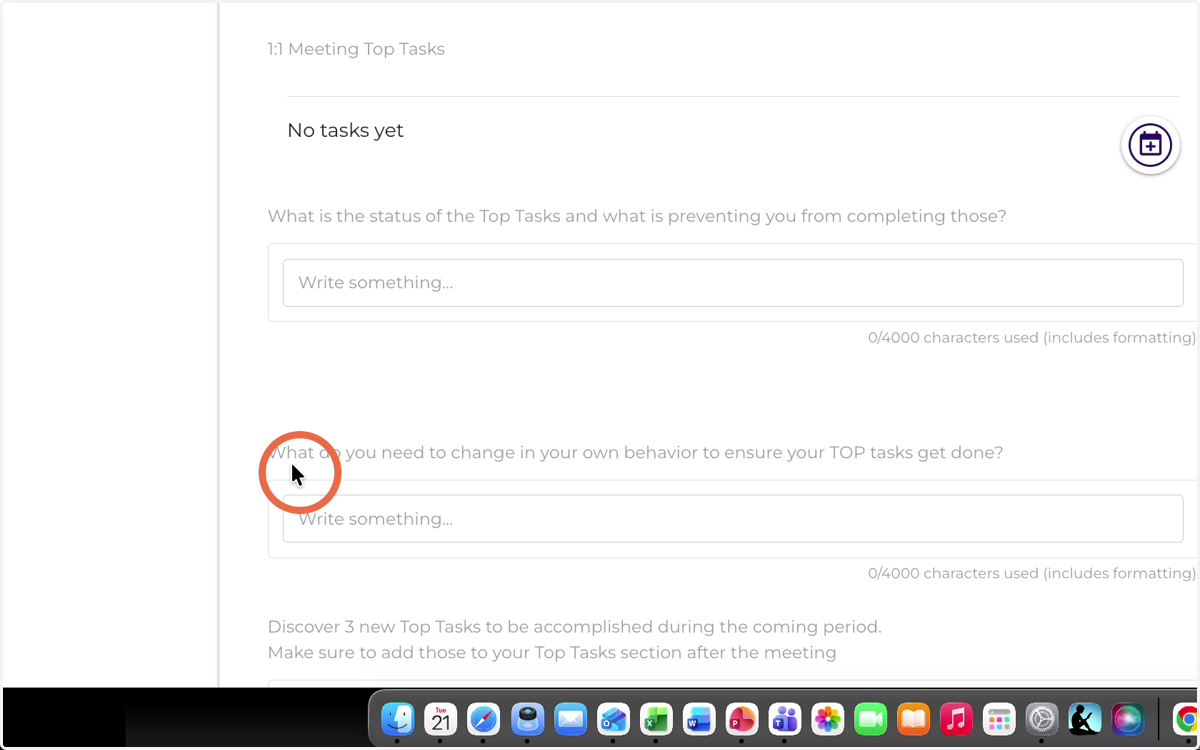
19. Enter the 3 TOP Tasks identified during this conversation that you will focus on completing between the two meetings.
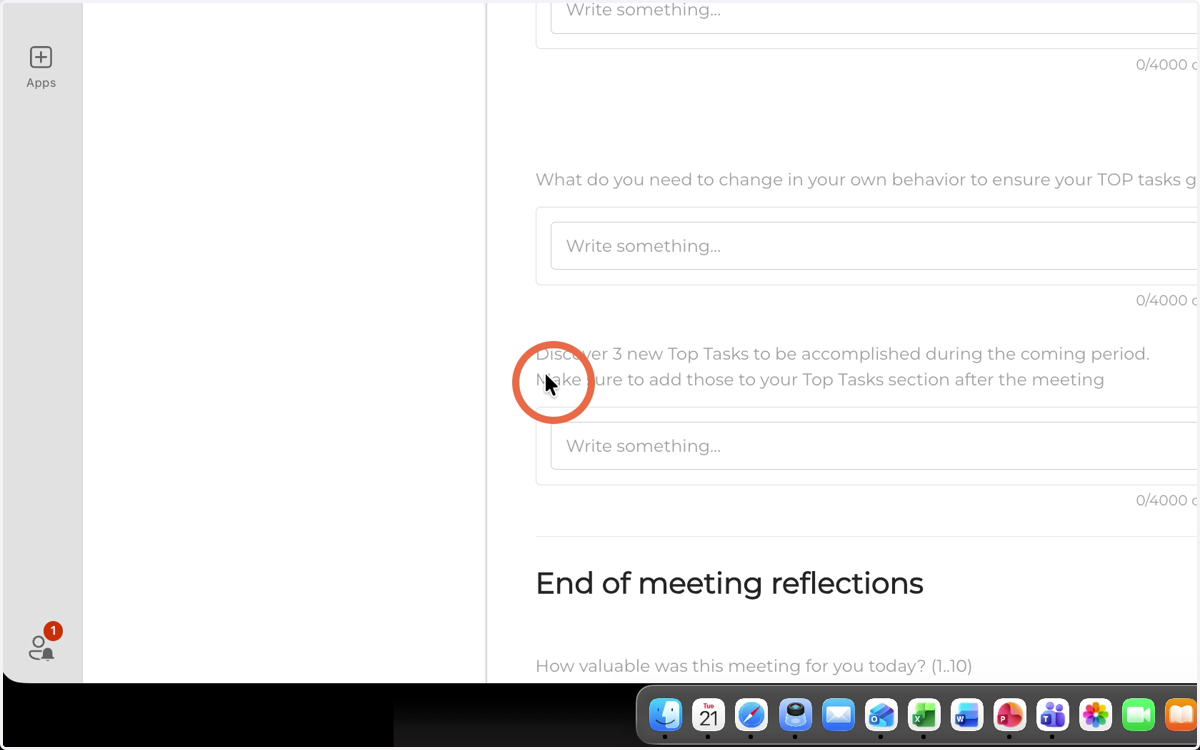
20. 1:1 Conversation Reflection
Rate, on a scale of 1–10, how valuable this meeting was for You.
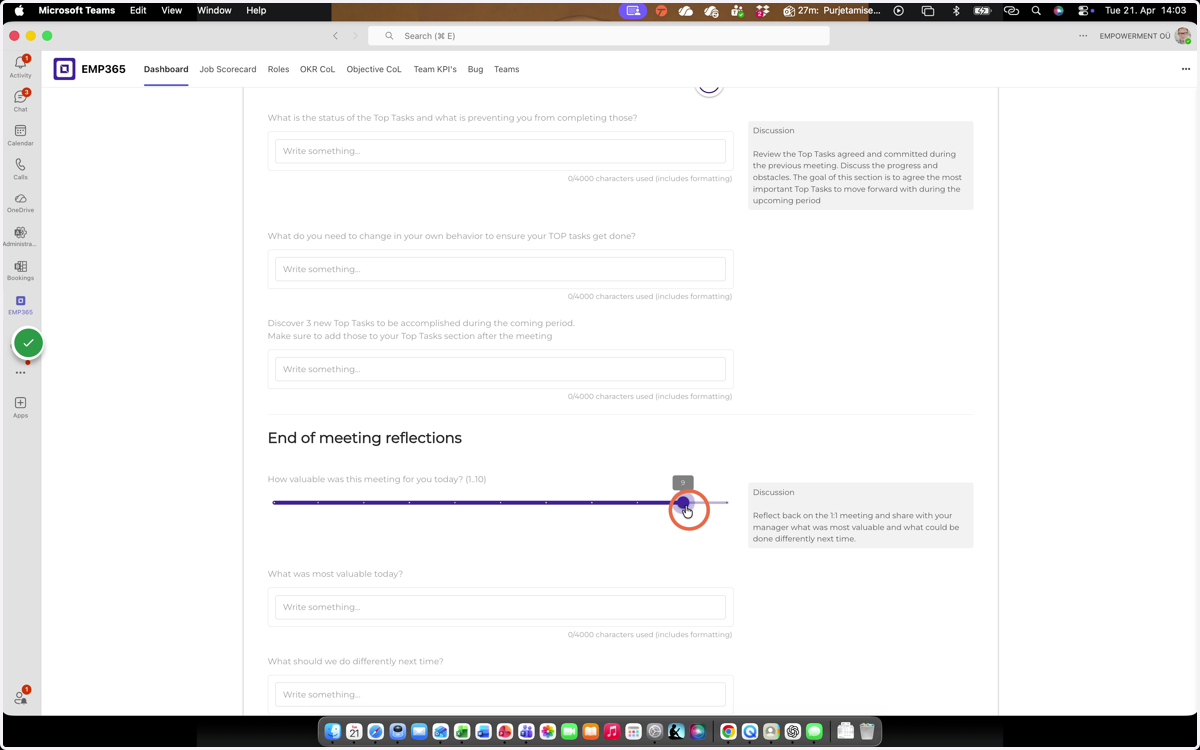
21. Enter the 3 most valuable takeaways from today’s conversation that you will immediately apply in your daily work.
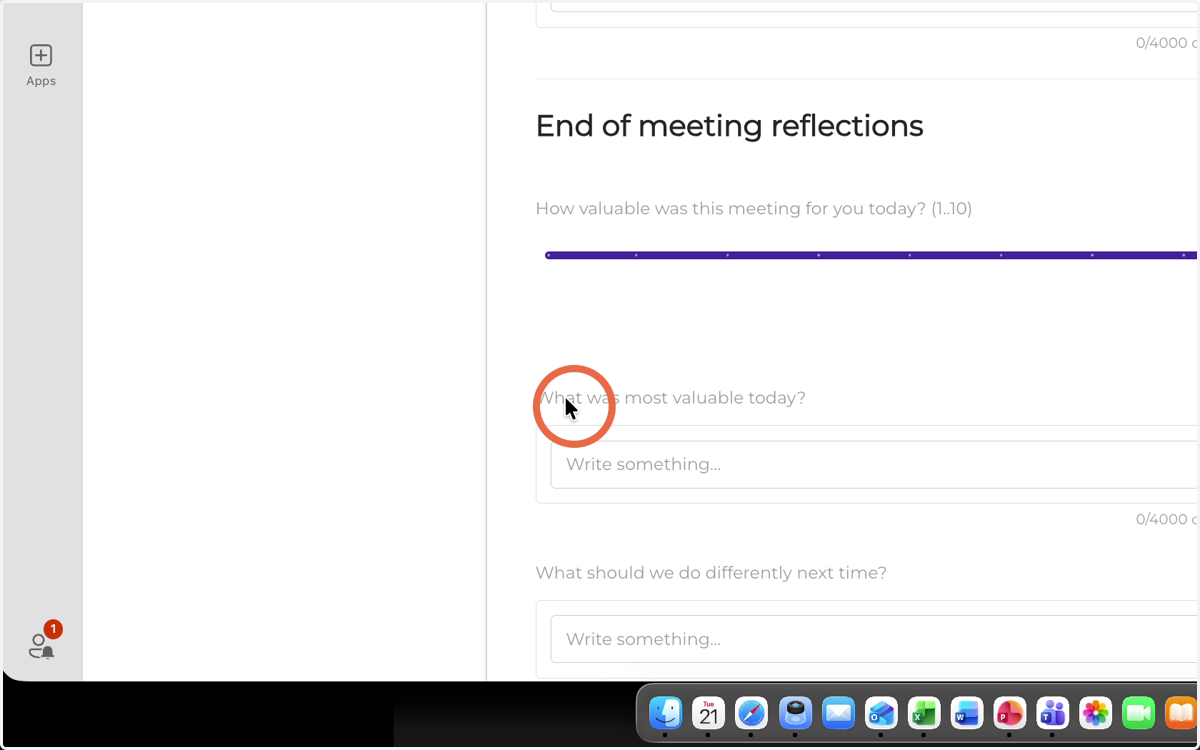
22. Provide feedback on the 1:1 conversation — what should be done differently next time to make it more valuable for YOU.