02_Bioinformatics and BLAST instructions
Bioinformatics is the development of software and computing tools to organise and analyse raw biological data.
One way in which bioinformatics is used is for the comparison of DNA sequence. This can be:
Comparison of known organisms to each other, to find out how similar their DNA sequence is
Identification of an unknown organism, by comparison of its DNA sequence to a database of DNA sequences from other organisms
To compare DNA sequences, a BLAST is used. BLAST stands for Basic Local Alignment Search Tool. In this task you will use a BLAST to identify invertebrates from their DNA barcodes.
DNA barcode is the name given to the DNA sequence of a gene found in the mitochondrial DNA of all animals. The mitochondrial cytochrome oxidase subunit 1 gene is used as the DNA barcode. It is a useful tool for identifying organisms as the gene sequence is constant within a species, but varies between species.
Find the National Centre for Biological Information (NCBI) website with free software for DNA sequence comparison
1. Click on the link for BLAST: Basic Local Alignment Search Tool.
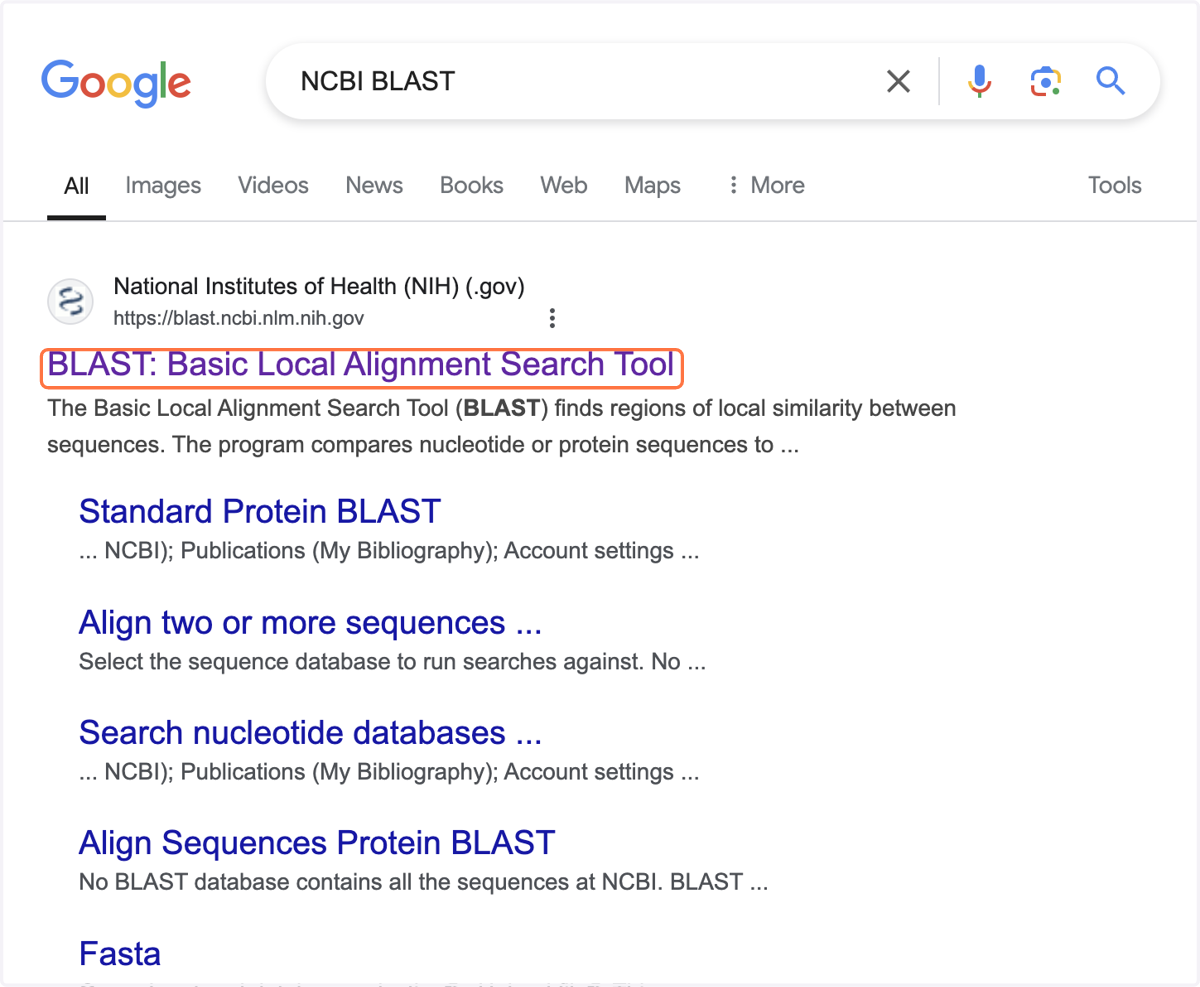
2. Type NCBI BLAST into an internet search engine.
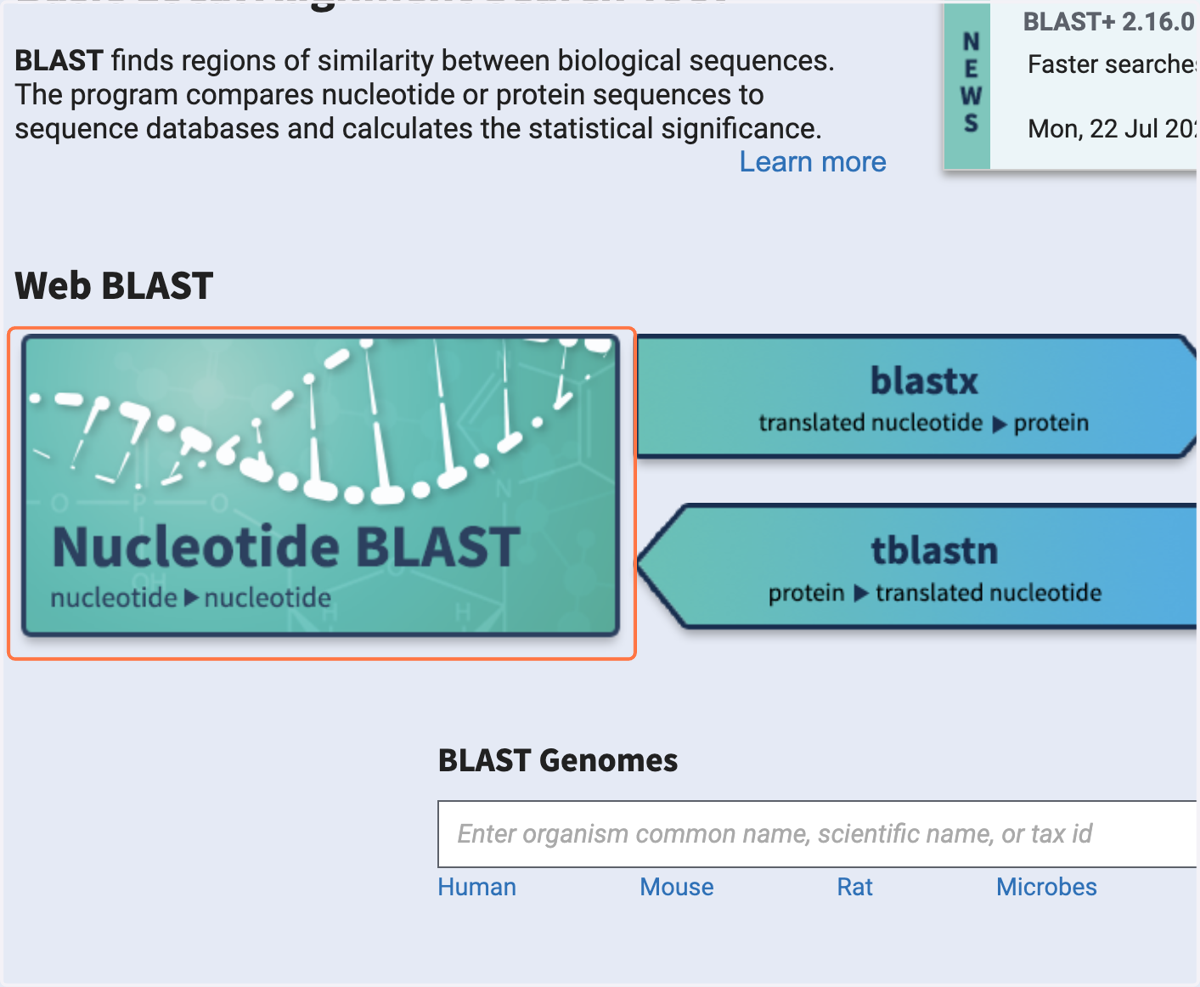
3. Select Nucleotide BLAST.
This should take you onto the blastn tab.
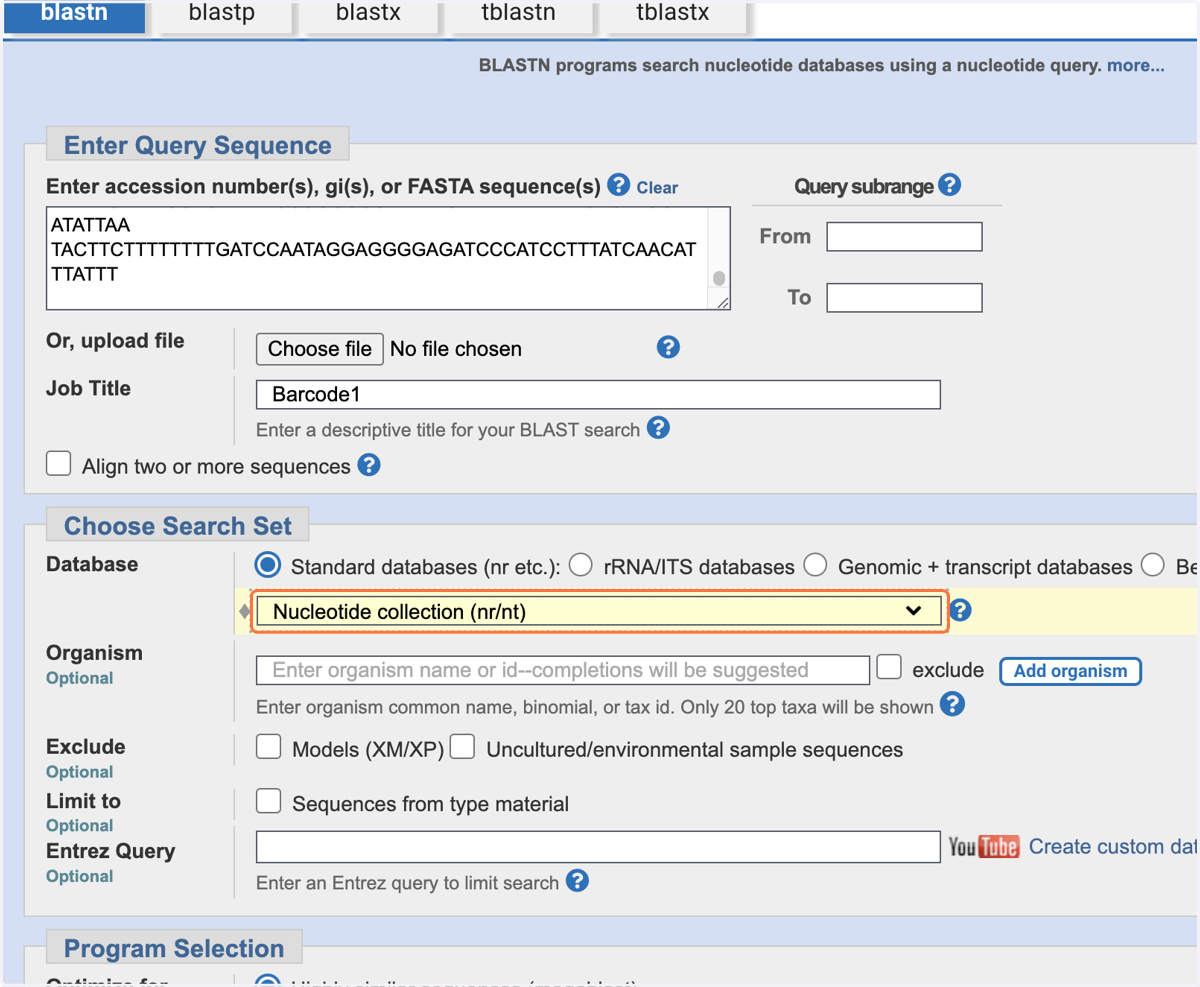
4. On the blastn tab, in the white box in the 'Enter Query Sequence' section, copy and paste the >, name and sequence for Barcode 1.
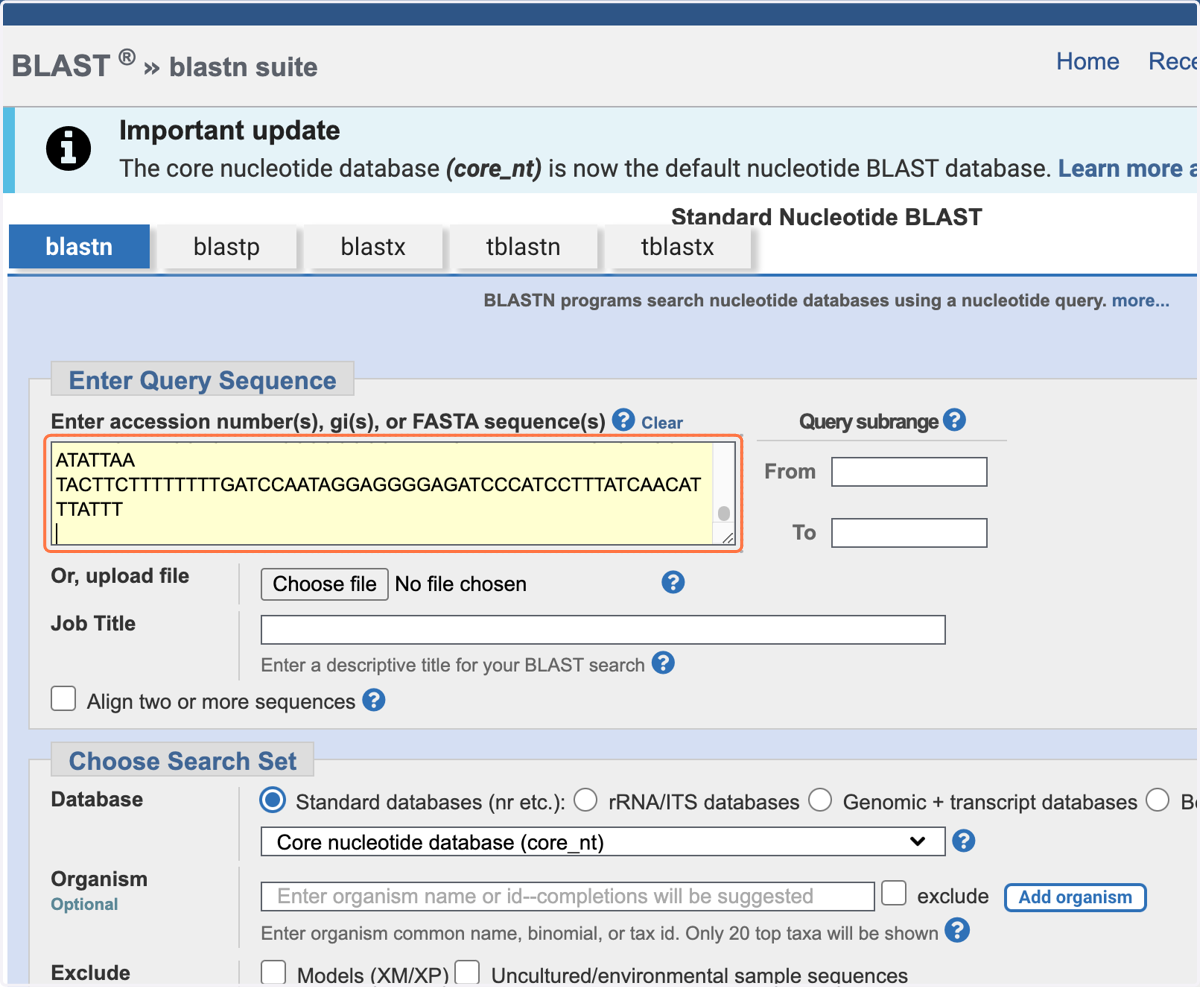
Match DNA barcodes from unknown invertebrates against a database of DNA sequences, to find which organisms the barcodes came from
5. Use the text file '02_R_Unknown-barcodes'.
6. In the 'Choose Search Set' section, the 'Standard databases (nr etc.)' should be checked.
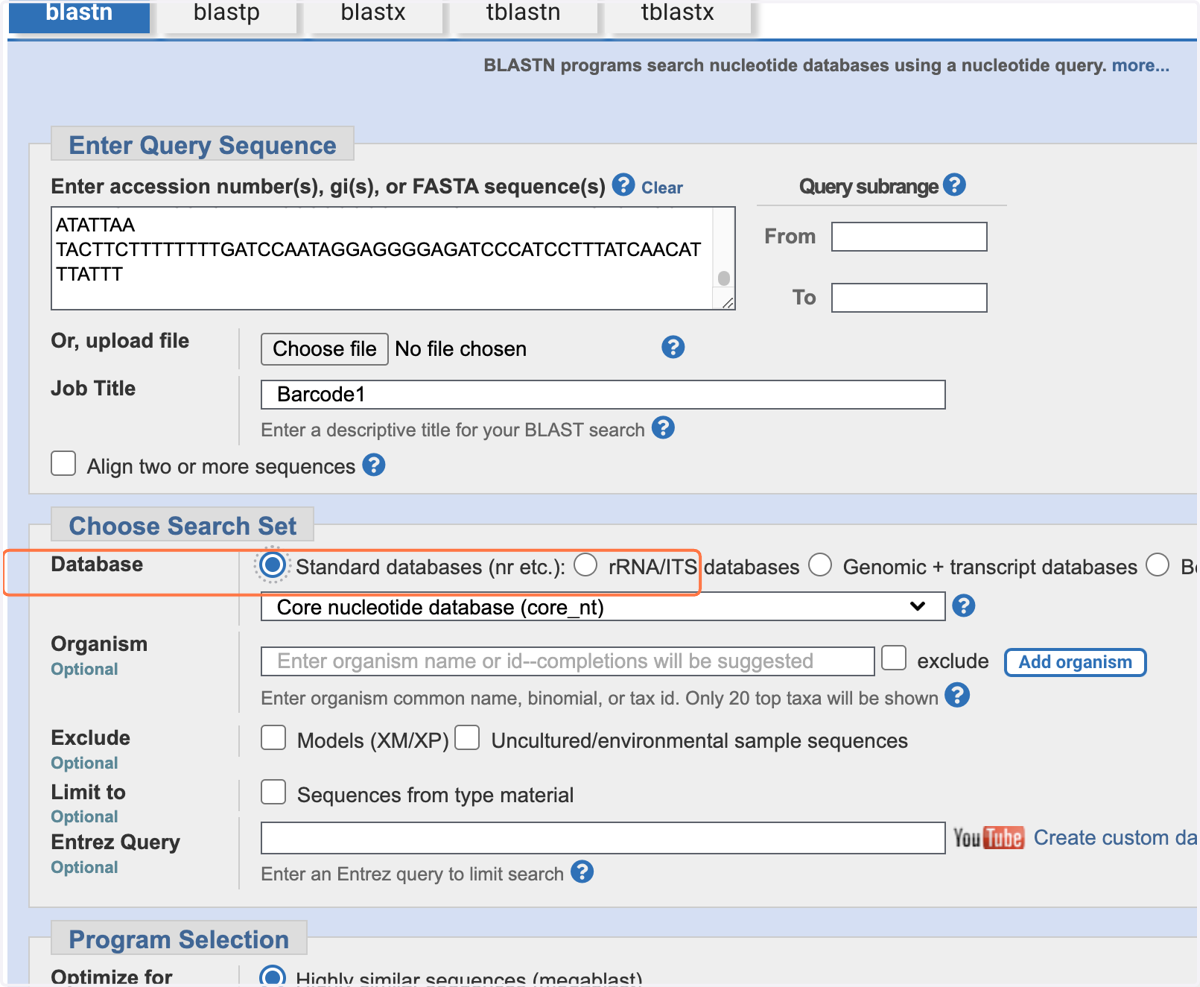
7. Copy the >, name and sequence for Barcode 1.
8. Select 'Nucleotide collection (nr/nt)' from the drop down menu.
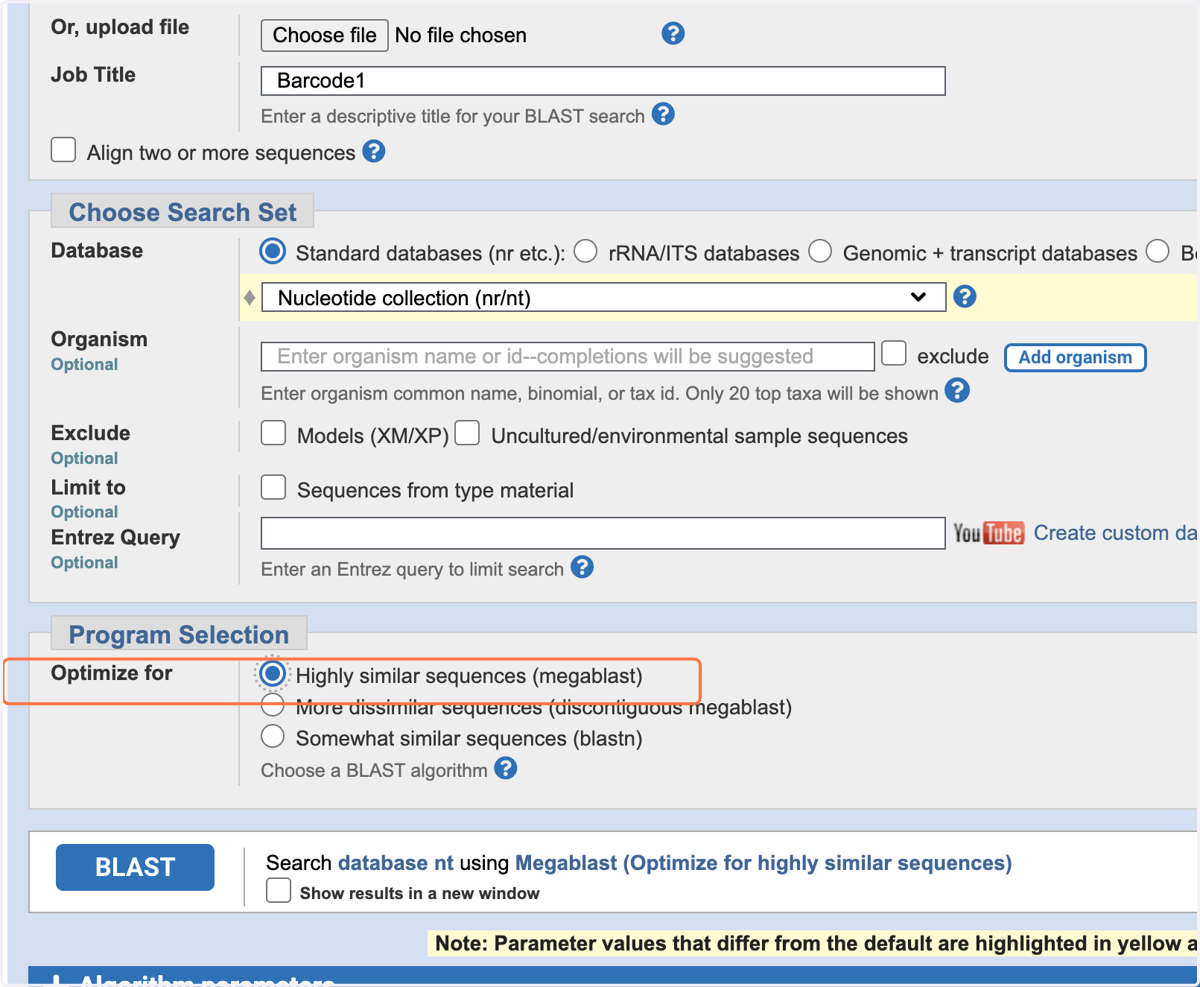
9. In the 'Program Selection' section, optimise for 'Highly similar sequences (megablast)'.
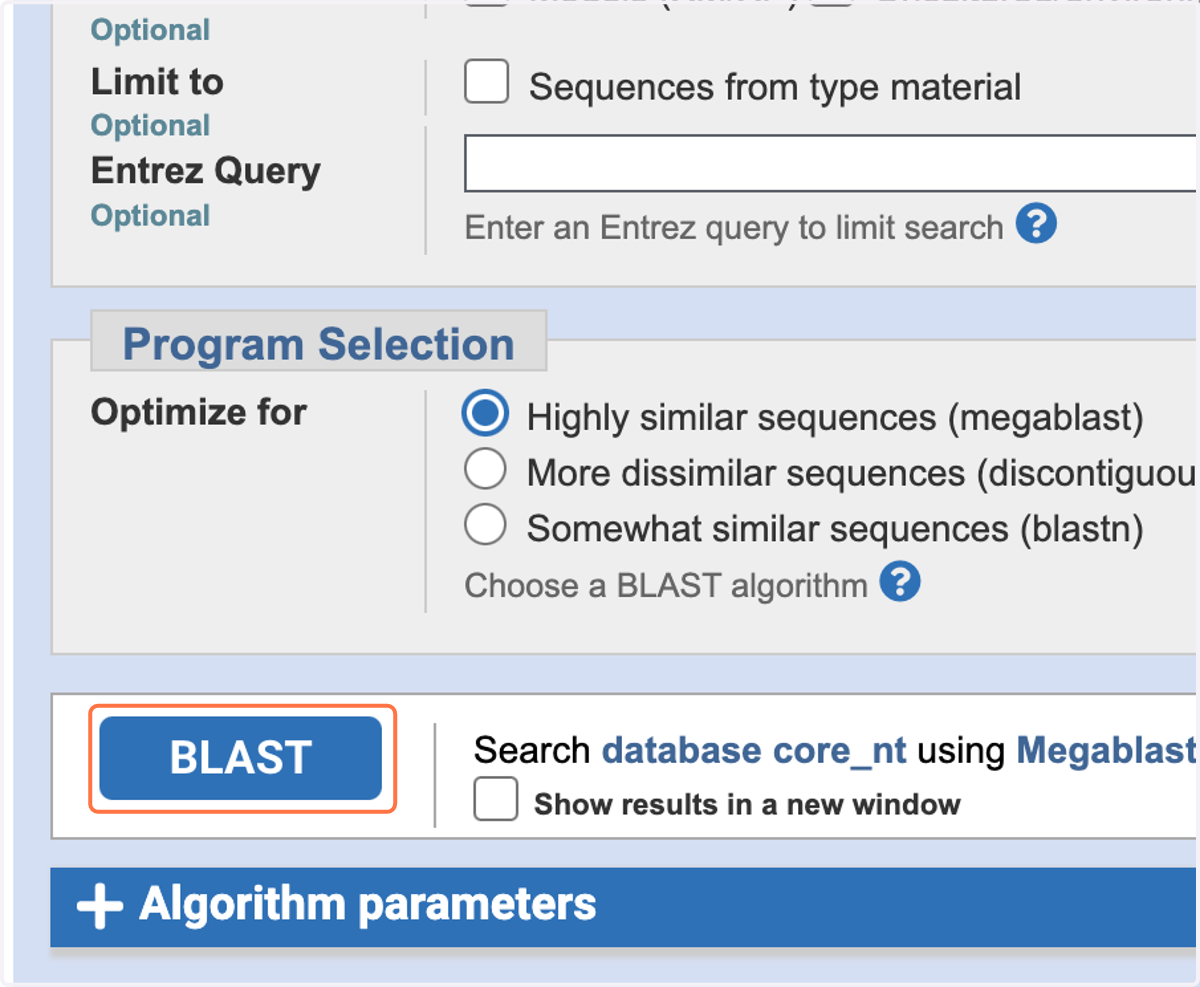
10. Click the blue 'BLAST' button.
Algorithms will try to find the best match for your barcode by comparing it to all of the DNA sequences stored in its database. Depending on how many searches are submitted at the same time as yours this may take a few minutes.
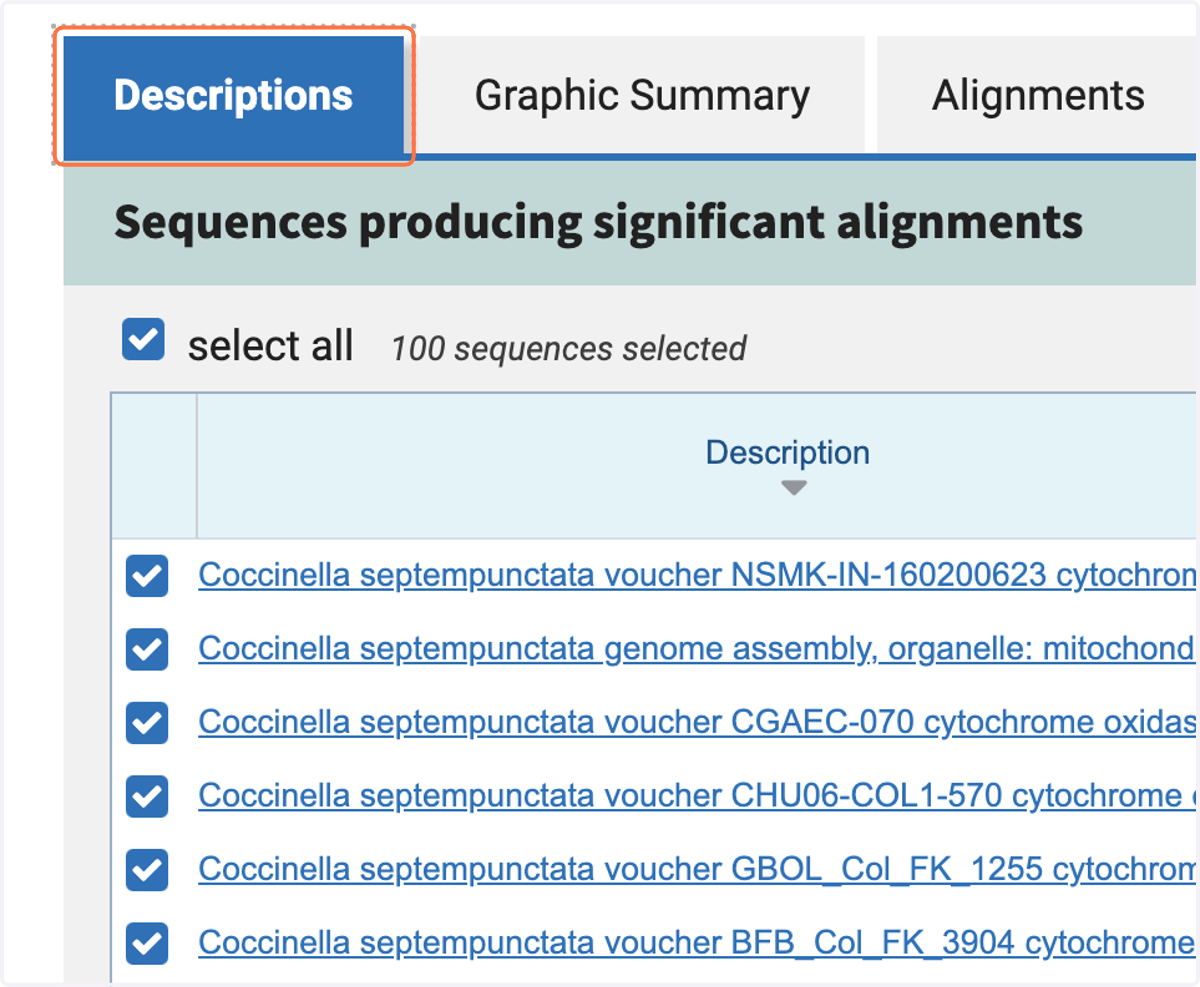
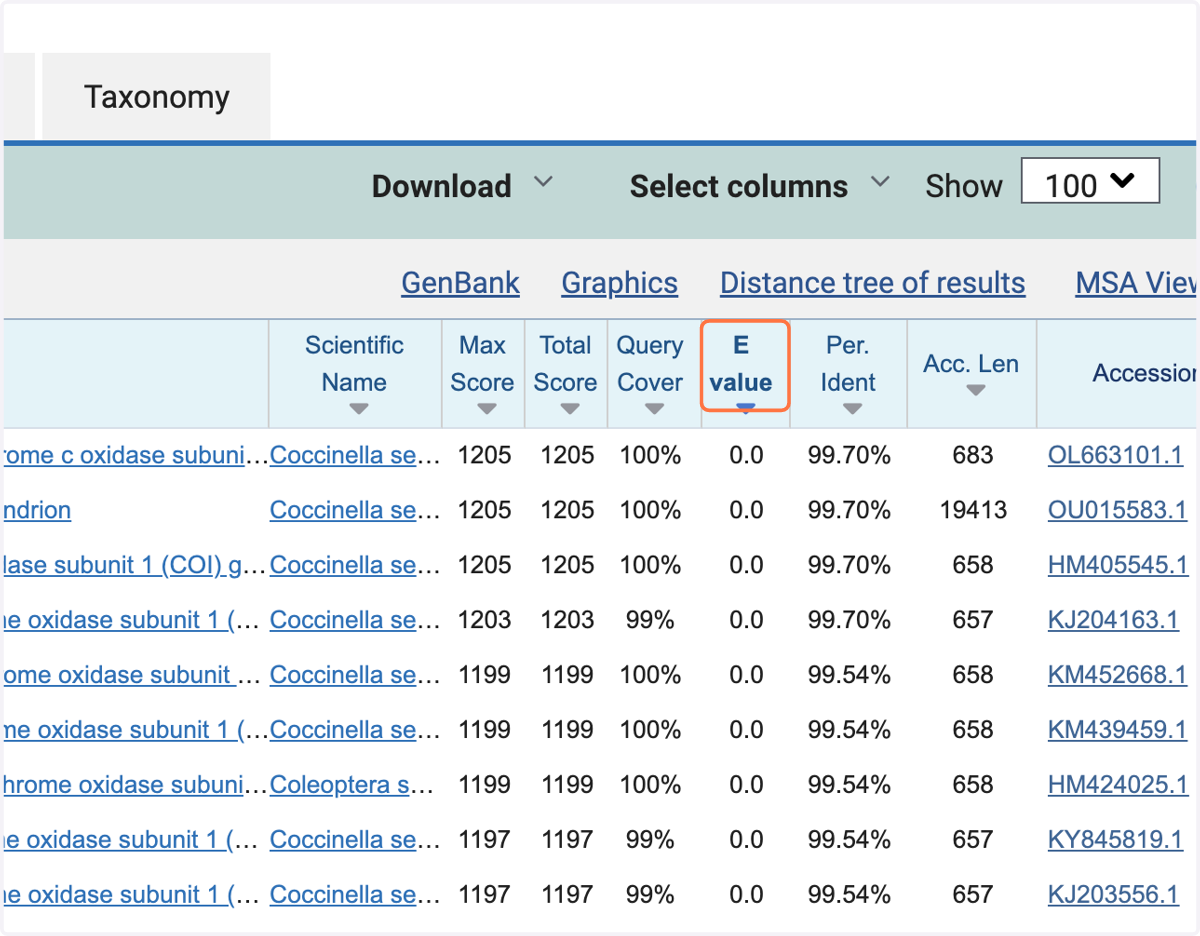
11. On the 'Descriptions' tab, you can see the scientific name (binomial classification) of the organism and the name of the DNA sequence that matches your query.
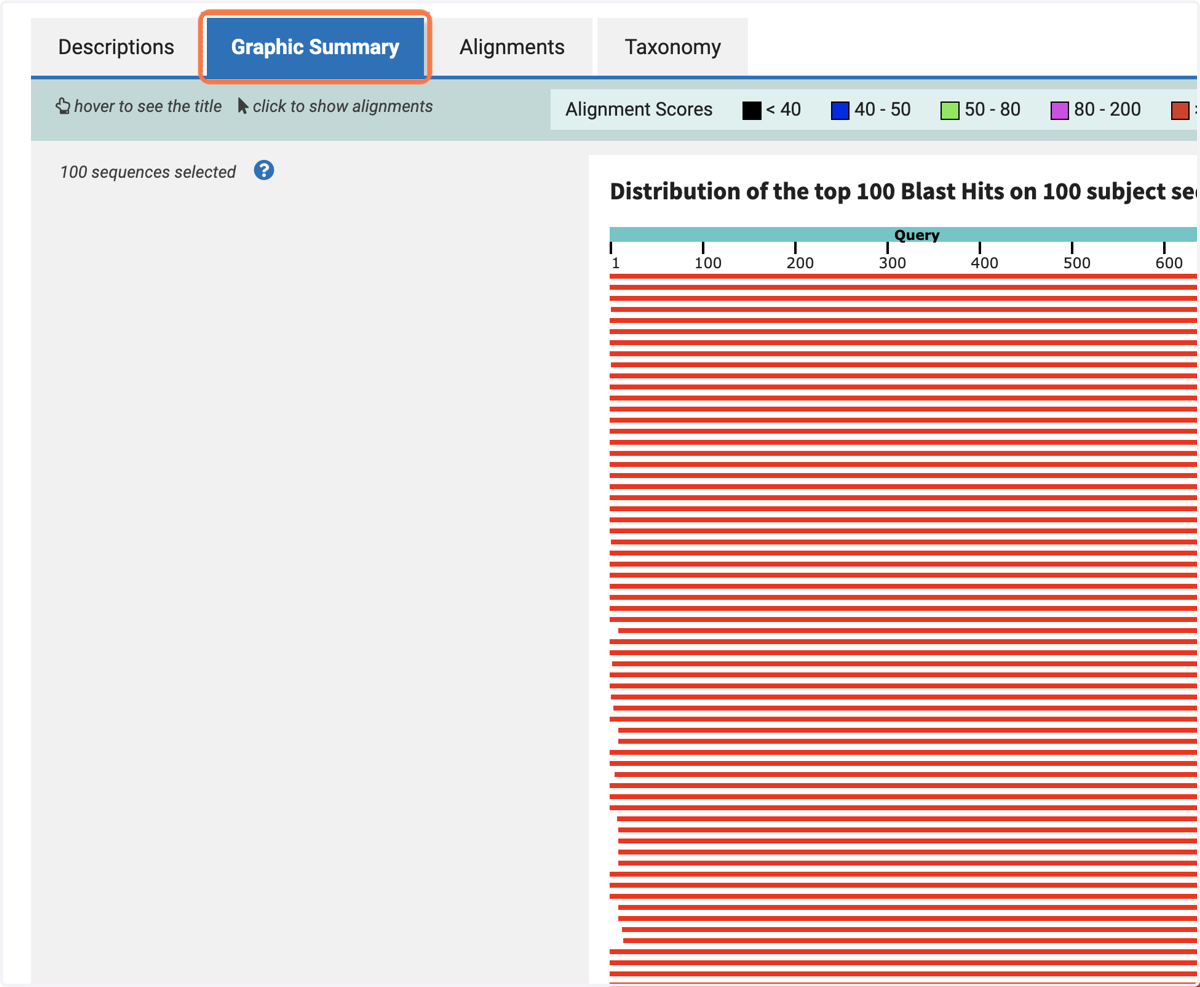
12. On the 'Graphic Summary' tab, you can see whether the sequence alignments are for the whole of the query sequence or just part of it.
13. On the 'Alignments' tab there is a detailed view of each sequence from the database aligned to the query sequence.
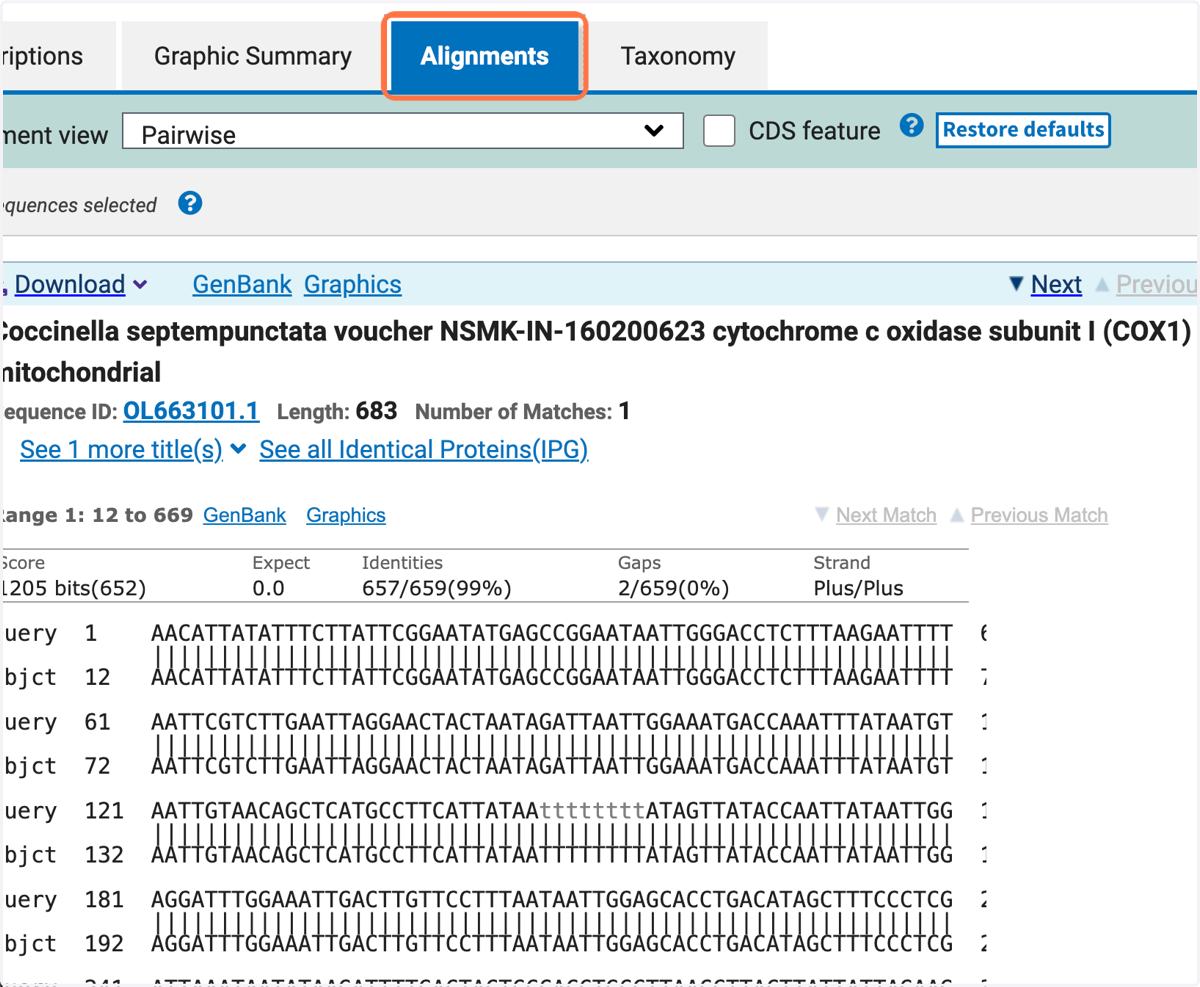
Understanding the results
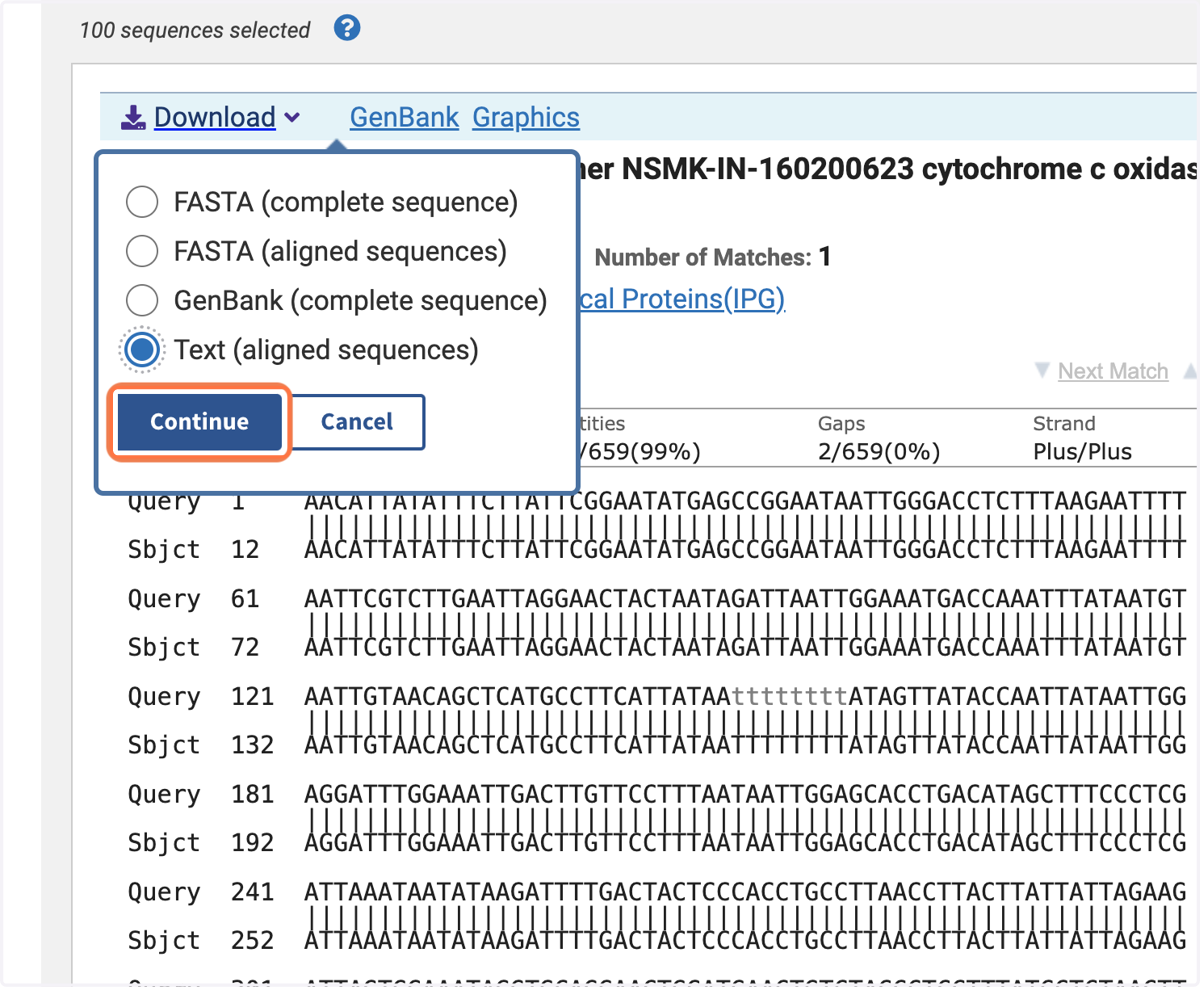
14. To present the results of your scientific identification of the invertebrate using a barcode, you should include this alignment. Click the 'Download' button in the top left hand corner.
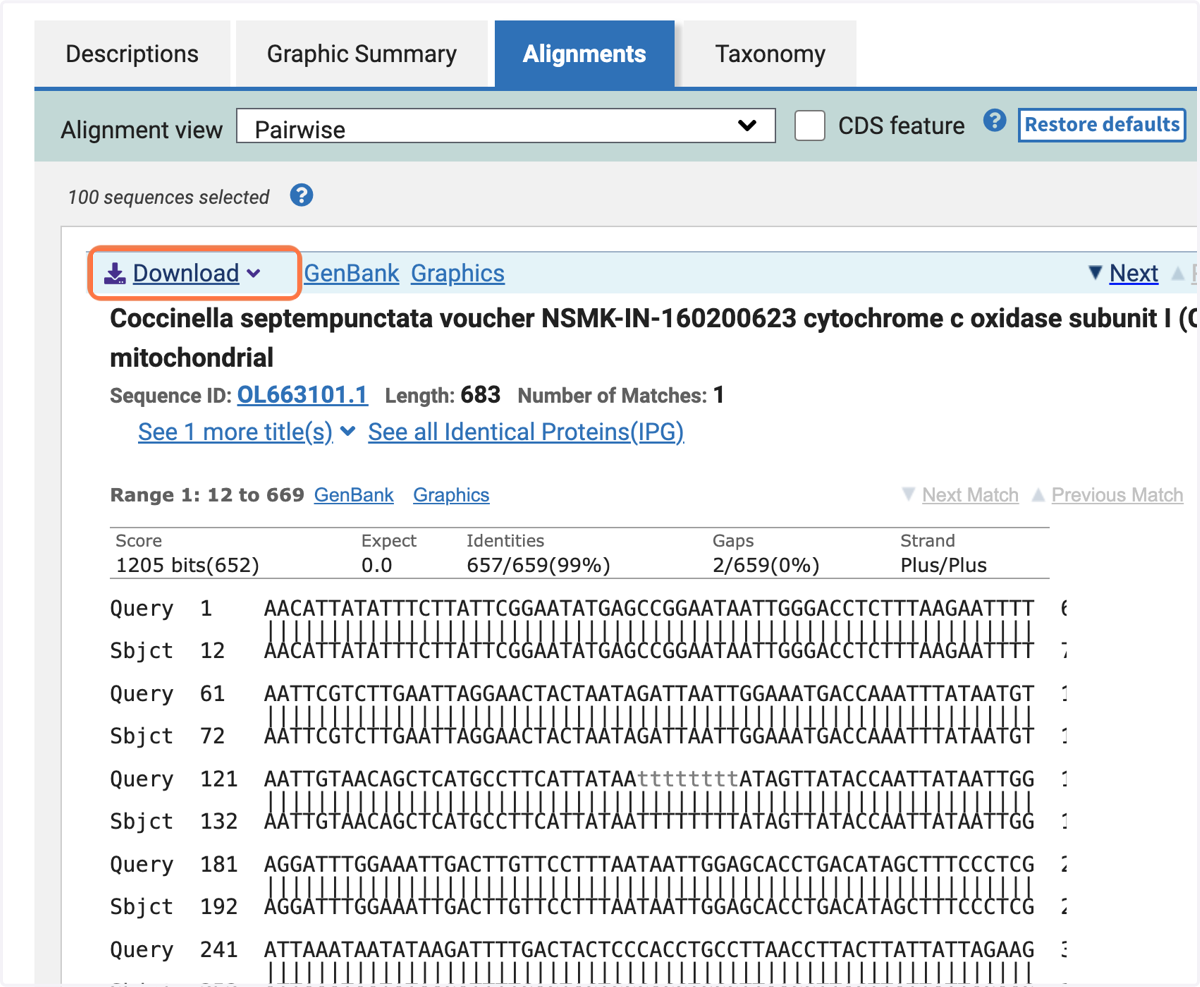
15. Scroll down until you see 4 tabs.
16. Select 'Text (aligned sequences)'.
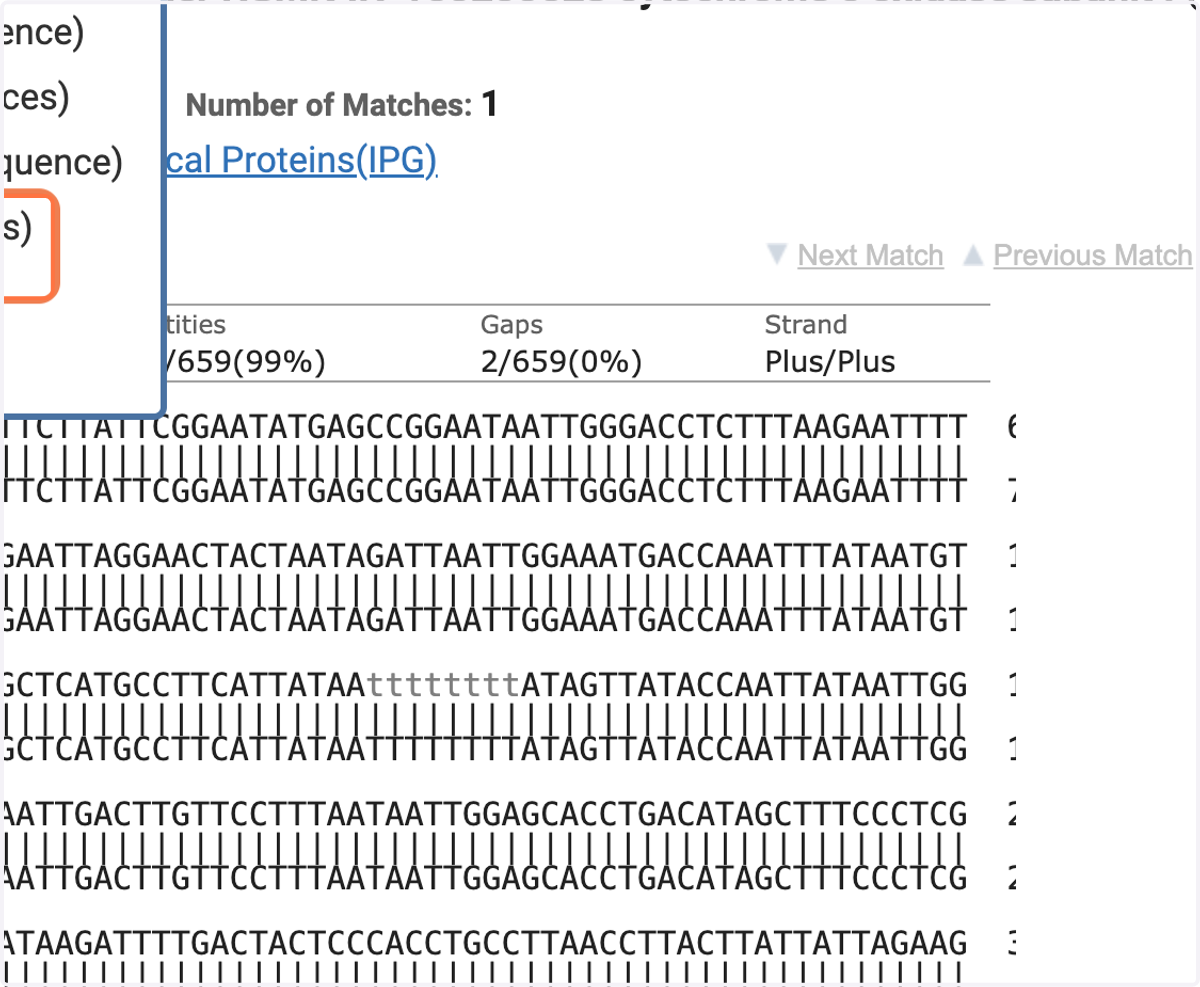
17. Then press 'Continue'.
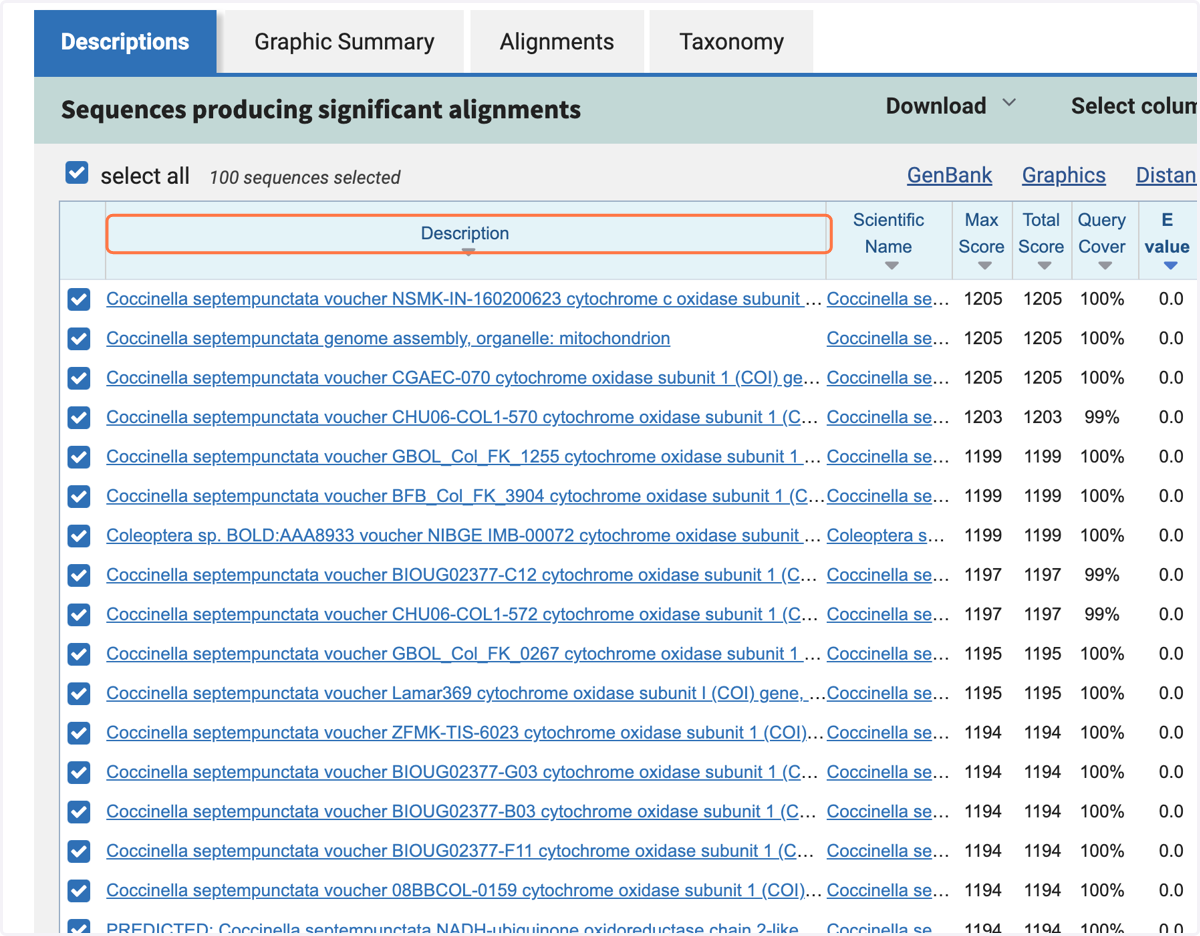
18. In the 'Description' column, each line shows the species name, a sample reference made up of numbers and letters, then what the DNA sequence is.
19. In the Scientific name column it gives the binomial classification of the organism.
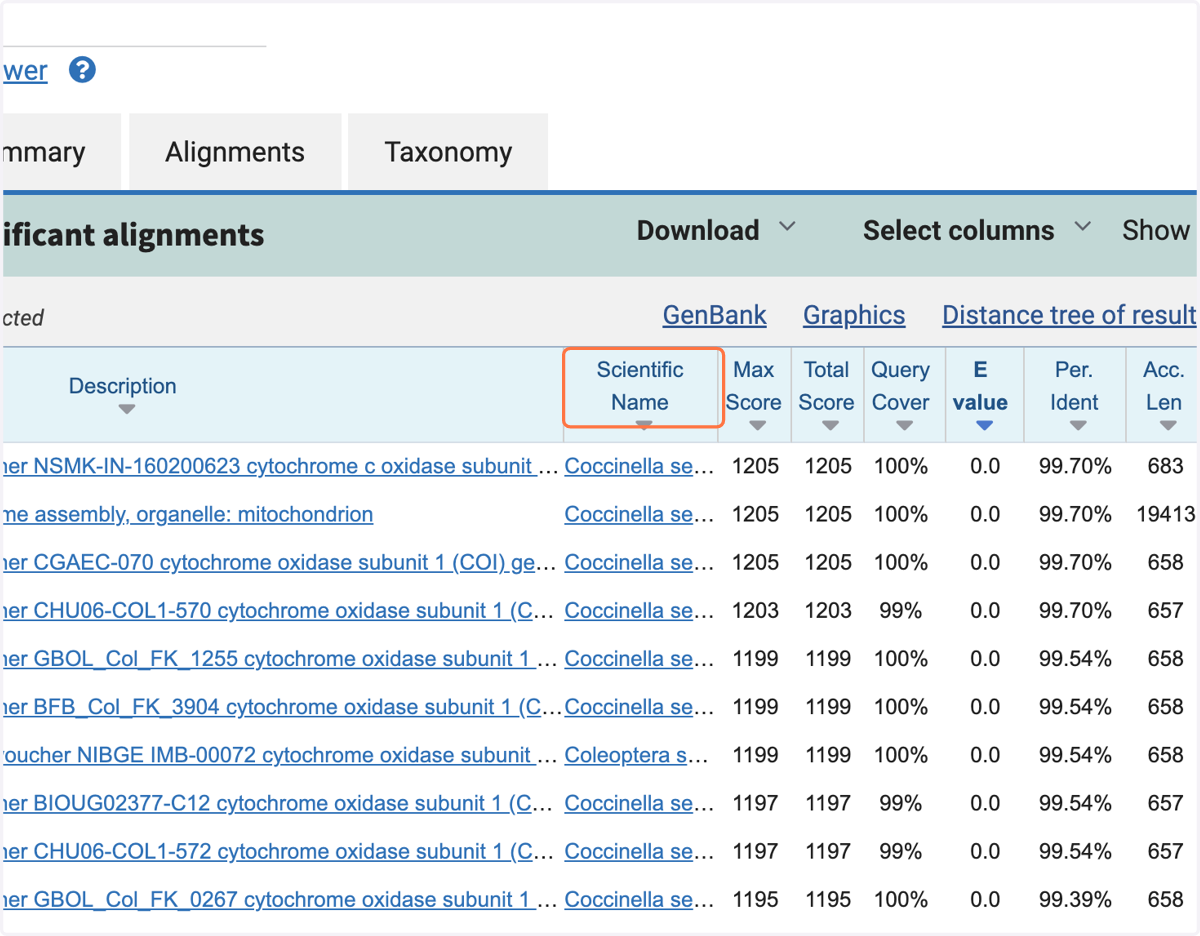
20. Click on this to see more information on classification and the common name, or type the bionomical classification into an internet search engine to find out what the common name for the invertebrate is.
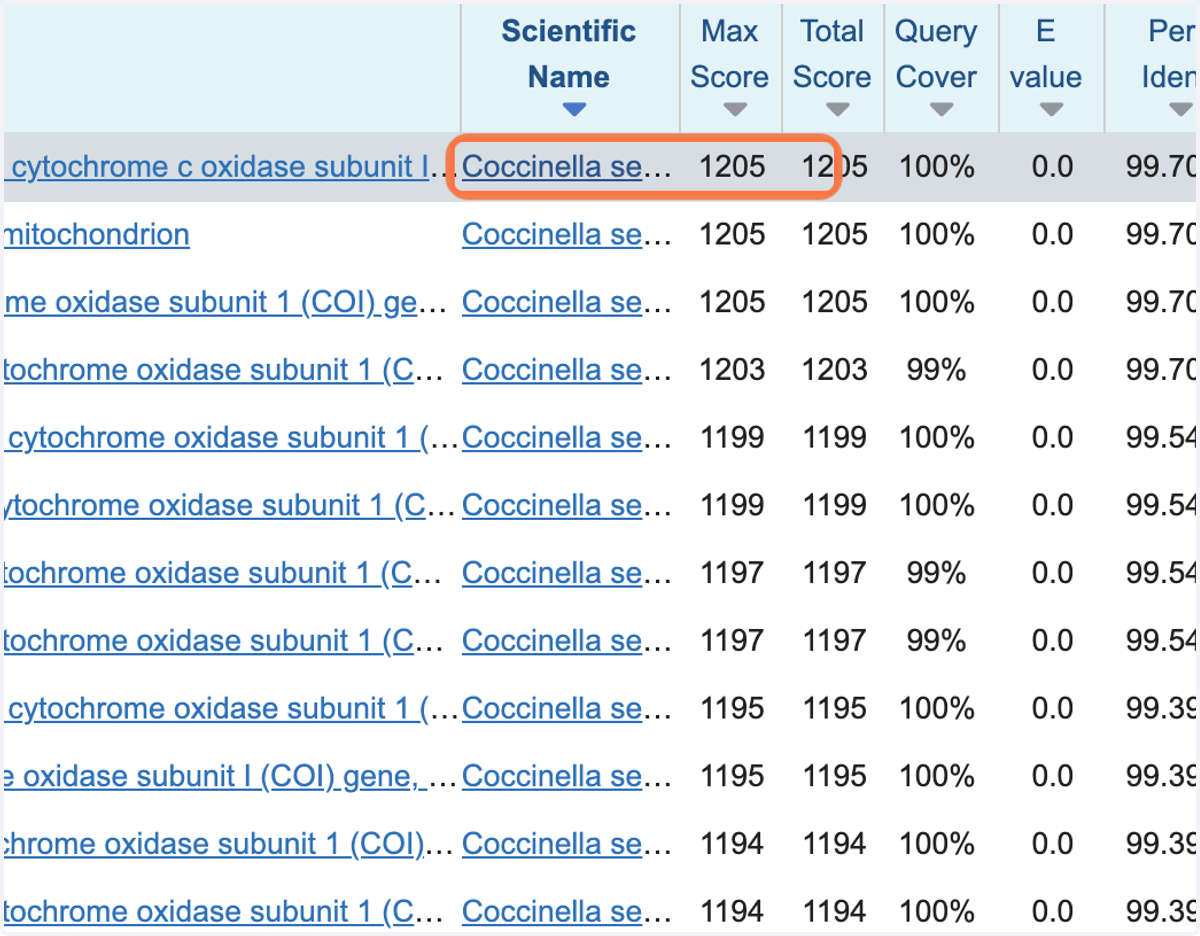
21. In a column to the right, the 'E value' or Expectation value, is the number of alignments with the query sequence that would be expected to occur by chance in the database.
22. Make sure that you save the alignment in a location and use a file name that you will be able to find again.
Writing up your results
23. Complete the worksheet 'Identifying unknown organisms using DNA barcodes'.
Enter the scientific name of the organism using binomial classification, the common name of the organism, the E value and the percentage of the query sequence that is identical to the DNA sequence from the