Process Sick Pay in an Employee's Payslip - Jersey
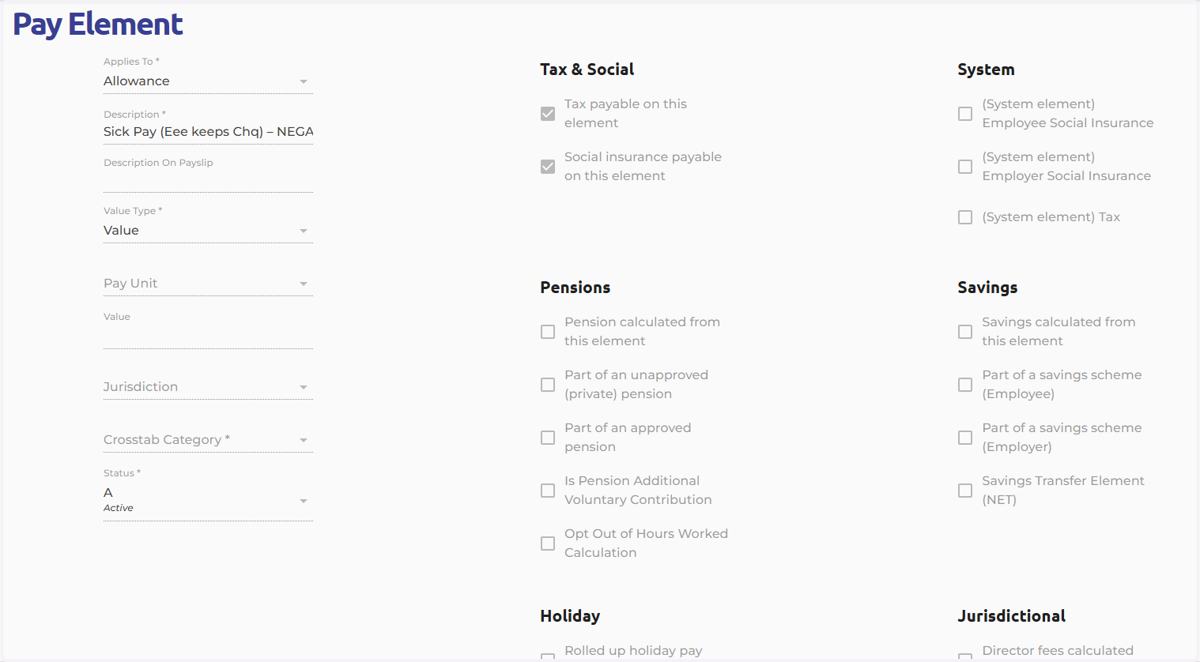
1. Allowance Sick Pay (Eee keeps Chq)- NEGATIVE ALLOWANCE
This pay element would be entered as a negative allowance, in a case where the employee keeps the cheque, you are reducing their pay by this amount and their tax and social contributions will be reduced.
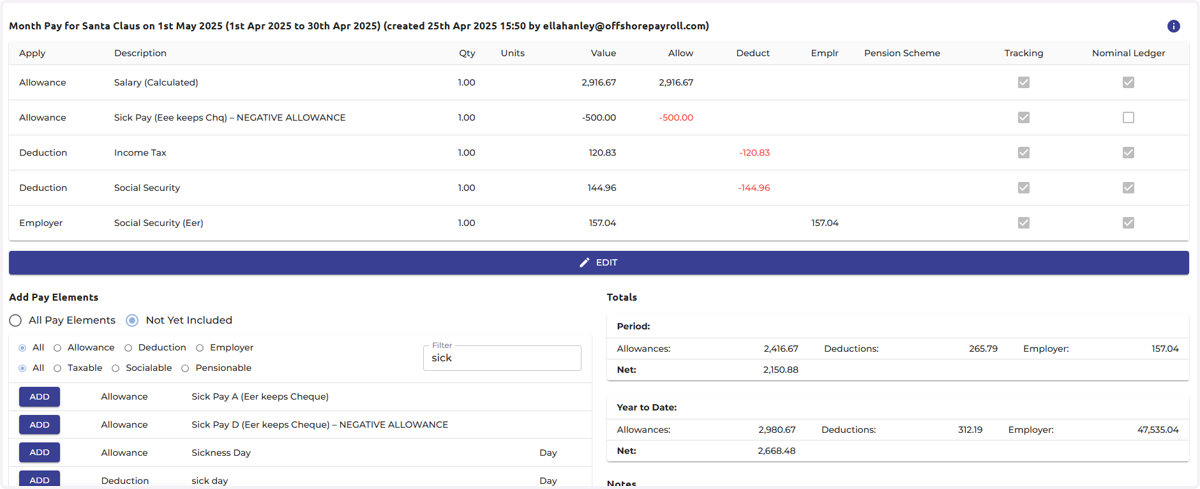
2. Payslip example
In this case 'Santa Claus' has received a 'sick pay' cheque and he is keeping the cheque. This would be entered as a negative allowance -£500. This will ensure that the taxable and social security amounts are reduced accordingly, and the employee's year-to-date (YTD) figures remain accurate.
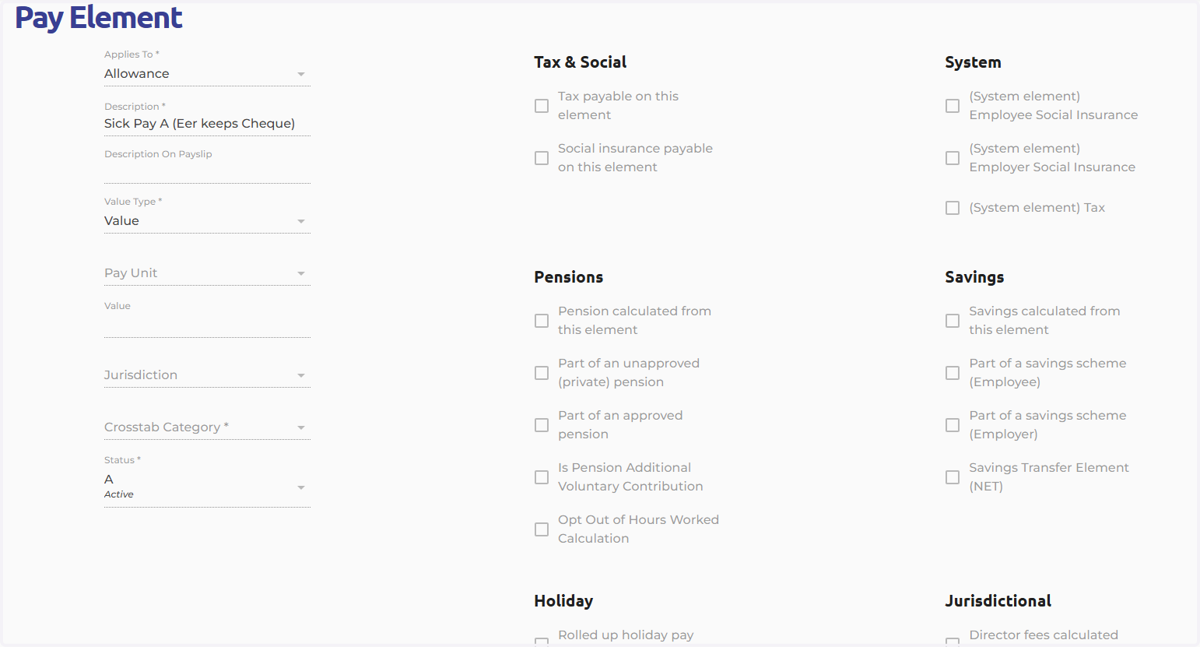
3. Allowance Sick Pay A (Eer Keeps Cheque)
This is a value-type pay element, which you can enter as a positive value and this will increase the total allowances but not the taxable and sociable allowances.
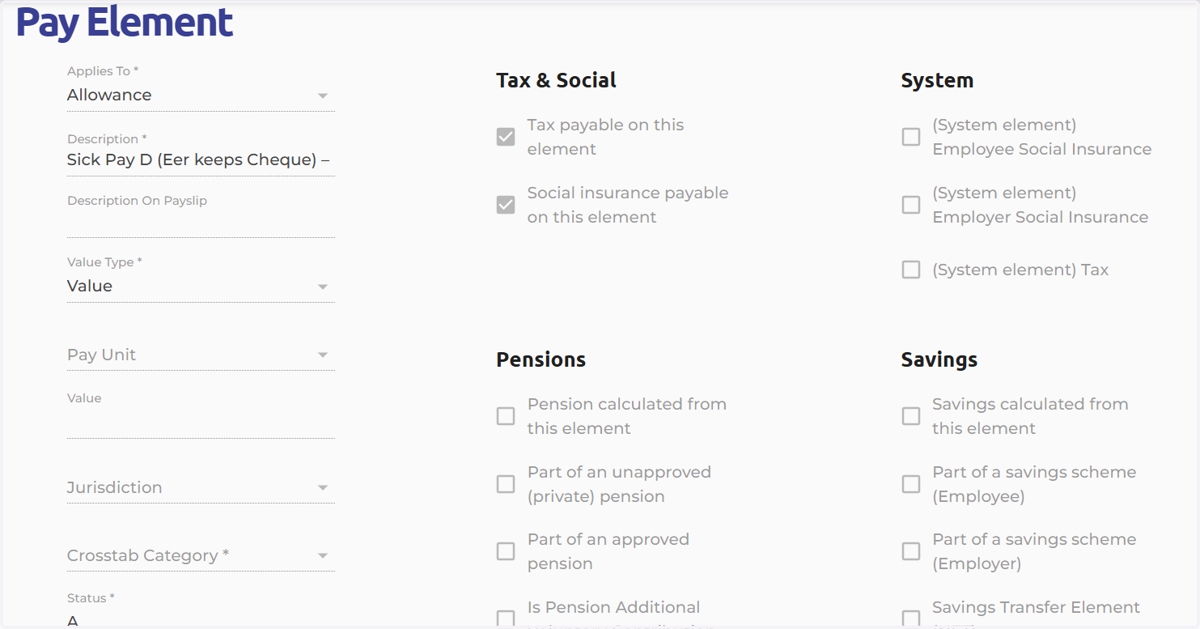
4. Sick Pay D (Eer Keeps Cheque)- NEGATIVE ALLOWANCE
You can then add in this negative allowance type pay element. This can be entered as a negative allowance, in a case where the employee keeps the cheque, you are reducing their pay by this amount and their tax and social contributions will be reduced.
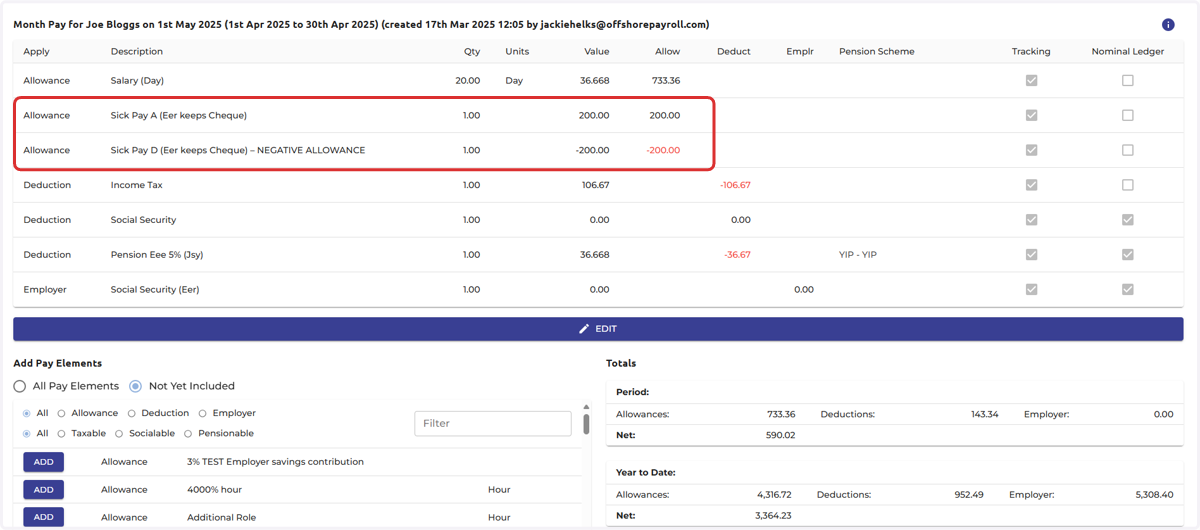
5. Payslip example
In this case, Joe Bloggs receives a £200 cheque for sick pay. Since the employer is retaining the cheque, the amount is first entered as a positive £200. A corresponding negative allowance is then added to the payslip to offset the payment. This ensures the taxable and social security amounts are reduced accordingly, and the employee's year-to-date (YTD) figures remain accurate.